MESOTHERAPY
Cellulite Mesotherapy
Cellulite mesotherapy involves giving mixtures of active ingredients through many small injections into or just under the skin, aimed at the appearance of cellulite in areas such as the buttocks and thighs. The evidence supporting this use is weak; it has not been shown to remove the appearance of cellulite.

- TREATMENT GROUP
- Mesotherapy
- TREATMENT AREAS
- Orange-peel skinButtocks and thighs
- SCIENTIFIC REFERENCES
- 26 publications
APPOINTMENTS
Let’s talk at a consultation about whether Cellulite Mesotherapy is right for you, what it involves and its possible risks.
Call usMessage us on WhatsApp+90 530 925 24 78
AT A GLANCE
At this clinic
- Product type
- Mesotherapy products chosen according to the aim of the treatment
- Sessions
- Usually as a course, planned according to your needs
- Treatment time
- About 20–30 minutes
- How long it lasts
- Varies with the treatment area, the product and the session protocol
- Anaesthetic
- Numbing cream (topical anaesthetic) if needed
- Follow-up
- According to the session plan
The product used and the session protocol differ from one treatment area to another.
What is cellulite mesotherapy?
Cellulite mesotherapy is the delivery of selected active ingredients, aimed at the appearance of cellulite, through fine needles as many small injections into the skin or the tissue beneath it. Mesotherapy developed in the 1950s from the experience-based observations of a French doctor; it was first used not for aesthetic purposes but for medical problems such as pain and blood vessel disorders.
Aesthetic uses such as fat reduction and cellulite came to the fore later. Mesotherapy for localised fat reduction falls into two groups. In the first, substances that stimulate the breakdown of fat stored in fat cells (lipolysis) are injected; because the cell is not destroyed, it can refill over time and the treatment needs to be repeated more often. In the second, the fat cell is destroyed with a detergent-like substance (ablative treatment); this leads to inflammation in the fat tissue and to scar tissue resulting from tissue damage.
There is also some confusion over the names. Injections containing phosphatidylcholine and deoxycholate, which makes it soluble, have at times been treated as the same thing as mesotherapy. This is not correct: these injections are a separate method, and their effects most likely come from the cell-destroying detergent effect of deoxycholate. What is meant by cellulite mesotherapy is the delivery of selected substances by micro-injections. You can find the general definition of mesotherapy and its other uses on the Mesotherapy page.
RELATEDMesotherapy
What does ‘cellulite’ mean, and where does the name come from?
Cellulite is the name for the dimpled, orange-peel-like appearance seen on the surface of the skin. In medicine, it is defined as a change in the shape (topography) of the skin surface, and it is reported to occur in almost all women after puberty. It has also been pointed out that the concept of cellulite, and how it is perceived, has changed over time.
In recent publications, cellulite is also called oedematous fibrosclerotic panniculopathy. This long name points to three things: fluid build-up in the tissue (oedema), hardening of the connective tissue (fibrosclerosis) and involvement of the fat layer under the skin (the panniculus). Publications that use this name also stress that the cause of cellulite is still not fully understood and that it depends on more than one factor.
Turkish has one more source of confusion: in medicine, the word ‘selülit’ is also used for a bacterial infection of the skin and the tissue beneath it. In English, the two conditions have separate names: cellulite and cellulitis. The two conditions are not related. What is discussed here is a change in appearance, not an infection; a suspected infection is not an aesthetic matter but one for a separate medical assessment.
When is it considered?
- The dimpled, ‘orange-peel’ appearance of cellulite on the buttocks and thighs.
- The appearance of cellulite on the abdomen.
- Concern about localised pockets of fat alongside cellulite; localised fat reduction has been treated as a separate topic in research.
- This list shows when the treatment may be considered; whether it is suitable for you is assessed at a consultation.
Is cellulite a disease?
No. Cellulite is a non-inflammatory change in appearance seen in most women after puberty; it is regarded as a cosmetic concern, not a disease. According to research, 80–90% of women have cellulite after puberty. A finding this common can also be seen as one of the body’s normal features.
In a study that examined 60 women using magnetic resonance imaging, the fat tissue under the skin in raised areas of cellulite did not differ in shape, size or thickness from control areas on the opposite side of the body. In the same study, cellulite severity scores were higher in older people and in those with a higher body mass index; people with a higher body mass index also had more fat lobules (small fat compartments).
In practical terms, this means that cellulite is not a condition that needs treatment; whether or not to have a treatment is a personal choice. If the appearance bothers you, the real question is which method can make a difference, how much of a difference, and for how long.
Why does cellulite form on the buttocks and thighs?
The cause of cellulite is not fully known. However, there is strong clinical evidence that the connective tissue partitions that anchor the skin to the tissues below (fibrous septa) play a central role. The fact that cellulite is more noticeable on the buttocks and thighs is also linked to this structure being different in women and men.
Under the skin there are two layers of fat, a superficial one and a deep one, separated by a membrane called the superficial fascia. The connective tissue fibres that anchor the skin to these structures (retinacula cutis), the fascia and the fat tissue interact with one another in three dimensions. According to a review of the anatomy, this interaction and the differences in this structure between women and men are directly related to how cellulite forms.
A cadaver study that examined buttock tissue from 10 male and 10 female donors measured this difference. In men, the fat lobules under the skin were more numerous; in other words, the partition connections between the skin and the fascia were denser, and the force needed to break these connections was also significantly higher in men. Female sex and a higher body mass index were associated with taller superficial fat lobules, and older age with thinner skin. The researchers describe cellulite as an imbalance between the forces that hold fat in place and the forces that push it outwards.
Looking at treatment studies from this angle gives an important clue: the absence of a lasting, consistent effect with methods that target the skin or the fat tissue suggests that changes in these tissues are not the primary cause of cellulite. Approaches that target the partitions mechanically, surgically or with enzymes are seen as the most likely route to lasting improvement.
Where does the evidence on mesotherapy for cellulite stand?
Weak. Although mesotherapy is widely used for cellulite, there are very few controlled studies showing its effect, and the results of the existing studies are inconsistent with one another.
Scientific information on this topic in medical databases is scarce, and most publications deal with complications of the technique. Researchers stress that new studies using appropriate methods are needed to confirm any benefit. There are experimental data suggesting that some substances in traditional mesotherapy mixtures could, in theory, reduce fat; however, these effects have not been supported by peer-reviewed (checked by independent experts) clinical studies.
Controlled data are limited and not favourable. In a study of 20 women, a mesotherapy mixture was given to one thigh once a week for 12 weeks, and the other thigh was left untreated. No significant difference was found between the two sides in thigh circumference or in fat-layer thickness measured by computed tomography, and participant satisfaction remained low. The researchers concluded that mesotherapy is not an effective option for body contouring. It should be added that this study measured body contouring, not cellulite severity.
The studies reporting positive results, on the other hand, are uncontrolled. In a study in which 21 women received mesotherapy injected into the skin (intradermal), reductions from baseline were reported in cellulite severity, thigh circumference and the thickness of the layer under the skin measured by ultrasound; however, there was no comparison group, and the researchers themselves note that the number of published studies is limited. A more recent study of 46 women, in which a commercial mixture containing hyaluronic acid (HA) and amino acids was given by injection, also reported improvement in most participants. However, the published abstract does not mention a control group, and the study reports its own level of evidence as IV; this is below the level of controlled studies.
SOURCEPMID 21437529PMID 16681654PMID 18349597PMID 28590783PMID 42582402
What are the injected mixtures meant to do?
Most mesotherapy mixtures used for cellulite and localised fat are prepared to stimulate the breakdown of fat stored in fat cells. This effect has been shown in the laboratory; it has not been shown to translate into a difference in the appearance of cellulite in the body.
In a laboratory study using human fat cells, substances used in aesthetic mesotherapy, such as aminophylline, yohimbine, isoproterenol and melilotus, each stimulated fat breakdown on its own, and this effect increased when they were combined. The same study found that lidocaine, a local anaesthetic (numbing medicine) often added to the mixtures, suppressed fat breakdown; the researchers stated that lidocaine should be removed from mixtures intended for localised fat reduction. According to a review of mesotherapy for localised fat reduction, the experience-based practice of adding local anaesthetics to the mixtures also prevents the intended fat breakdown.
There are two separate limits here. First, an effect seen in cell culture does not mean that the same substance will make a visible difference when it is injected into the skin. Second, the connective tissue partitions are thought to play a role in the underlying cause of cellulite, and methods that target the skin or the fat tissue have not shown a lasting, consistent effect. How far an approach that targets only the fat cell can affect this structure is an open question.
The content of the mixture is not standardised either. Because mesotherapy was designed from the outset as a method using a mixture of several substances, the name ‘cellulite mesotherapy’ does not describe a single product or a single formulation. It is therefore a good idea to ask which substances will be used before the treatment.
RELATEDBody Mesotherapy
Which method has strong evidence for cellulite?
None of them has conclusive evidence. Reviews that systematically assessed cellulite treatments either found no clear evidence of good effectiveness for any of the methods examined, or found that no method is firmly established.
In one systematic review, only 19 of the 67 studies examined were randomised and placebo-controlled; that is, studies in which participants were randomly assigned to groups and compared with an inactive (dummy) treatment. Most of the studies, including those on laser and light-based methods, radiofrequency (RF) and others, had important methodological flaws; some did not even use cellulite severity as an outcome measure. Some evidence of possible benefit was seen only for acoustic wave therapy and one minimally invasive laser method. Another comprehensive review looked at 73 studies and found that results varied markedly from study to study and that it is still difficult to show that any single treatment is effective.
A more recent systematic review that included only randomised controlled trials covered 24 trials and 2,084 patients. It found that there are many methods, but none is firmly established; shock wave therapy, radiofrequency and injections under the skin are among the methods showing promising results. The study’s abstract gives the enzyme collagenase as an example of injections under the skin; it does not mention mesotherapy separately.
According to a clinical guideline published in 2024, there is no consensus on the best treatment for cellulite; one reason is the complex, multifactorial nature of cellulite. The guideline discusses lifestyle changes for mild cellulite and minimally invasive approaches for advanced cellulite, such as subcision (releasing the connective tissue bands under the skin) and injections, and recommends considering a combination of methods. The information in this section reports research findings; it is not a recommendation.
Other approaches: collagen stimulators and subcision
Injection-based approaches other than mesotherapy have also been studied for cellulite. The main ones are collagen stimulators and methods aimed at releasing the connective tissue bands under the skin. The evidence for these methods also comes from small studies.
Among collagen stimulators, poly-L-lactic acid (PLLA) was tested in a double-blind, randomised trial in 20 women with mild to moderate skin laxity (loose skin) and cellulite on the buttocks and thighs. One half of the body was treated and the other half served as the control; 3 treatment sessions were given 4 weeks apart, and participants were followed up for 330 days. A reduction in dimple depth and an improvement in the overall appearance of cellulite were reported on the treated buttock. In another, placebo-controlled study, PLLA was used together with subcision in 31 women; because the control group also had subcision, the abstract alone does not make clear how much of the improvement was due to PLLA.
Subcision is the release of the connective tissue bands under the skin with a fine needle or instrument; collagenase is an injection that aims to dissolve these bands with an enzyme. A systematic review and meta-analysis (an analysis that combines data from several studies) compared the two for cellulite on the buttocks and thighs, covering 14 studies and 1,254 patients. According to this analysis, both methods appear effective; however, bruising is very common with both, and more standardised research is needed. These approaches, which target the partitions, are also consistent with the current view of how cellulite is structured.
The information here is not a recommendation and does not show whether these methods are offered at the clinic. You can find detailed information on the use of collagen stimulators outside the face, and on their limits and risks, on the Collagen Stimulator Treatments page.
Limits of this treatment
Cellulite mesotherapy does not remove the appearance of cellulite, and its use for this purpose is not based on strong evidence. This is the most important thing to know.
The first limit is the evidence itself. In the controlled study in which one thigh was treated and the other left untreated, no difference was found between the two sides; the studies that report positive results have no control group. A systematic review that assessed cellulite treatments in general found no clear evidence of good effectiveness for any of the methods examined. According to another review, there is not enough evidence on the effectiveness of most treatments, and the results are unpredictable.
The second limit is duration. With treatments that stimulate fat breakdown, the fat cell is not destroyed and can refill over time, so the treatment needs to be repeated more often. Follow-up periods in cellulite treatment studies are short, and the lack of a lasting response is specifically highlighted. There are no reliable data on how long any effect lasts.
The third limit is the target itself. The connective tissue partitions are thought to play a role in the underlying cause of cellulite, whereas methods that target the skin or the fat tissue give inconsistent results. Mesotherapy is not a substitute for weight loss, a surgical procedure or general body contouring. A review of mesotherapy for localised fat reduction stresses that research in this field should aim to obtain formal approval for a specific use (an indication), rather than expand off-label use (using a medicine for a purpose for which it has not been officially approved).
SOURCEPMID 18349597PMID 28590783PMID 25940753PMID 20159305PMID 23800269PMID 32976174
Known risks
Mesotherapy is a medical procedure carried out by injection, and it has risks. The risk most emphasised in research is skin infection caused by contaminated injections; allergic reactions, inflammation of the subcutaneous fat (the fat layer under the skin) and tissue damage have also been reported.
A systematic review looked at non-tuberculous mycobacterial (NTM) infections linked to mesotherapy (infections with mycobacteria other than the one that causes tuberculosis). It examined 423 patients in 30 publications. Most patients were women, and the infections occurred most often on the abdomen, buttocks and thighs, the same areas where cellulite treatments are done. Most infections cleared with antibiotics; however, many patients needed more than one course of antibiotics, recovery took weeks, and scarring after treatment was common. According to the researchers, these infections came from injections contaminated from the environment.
A review of mesotherapy for localised fat reduction also identifies the main safety concern as infections at the injection site caused by inadequate sterile technique. In one reported outbreak, people who developed infections after fat-reduction injections were found to have had mesotherapy injections from the same beautician within a one-month period. That is why who carries out the treatment, and under what conditions, is a safety question.
Other reports are at the level of case reports (reports on individual patients). A publication presenting a case of panniculitis (inflammation of the fat tissue under the skin) caused by mesotherapy notes that allergic reactions, tissue death (necrosis) and infections have also been reported. In one case in which a substance of unknown content was injected for cellulite, a tissue reaction called an oleoma developed on the thigh and buttock two years later; the itchy lesions improved with medication, but sunken scars remained.
Before the procedure, you will be asked about blood thinners, antiplatelet medicines and supplements that can affect bleeding. Do not stop any prescribed medicine on your own. If needed, the procedure is planned or postponed after consulting the relevant doctor. How these risks apply to you specifically is discussed at your consultation.
SOURCEPMID 39916988PMID 23800269PMID 42603027PMID 17241581PMID 22250624
What do consensus statements say?
Until recently, there was no internationally accepted, evidence-based standard for mesotherapy; consensus statements published in recent years aim to fill this gap. These documents are not new studies that strengthen the evidence for cellulite; they are frameworks for how the treatment should be carried out.
The international consensus guidelines published in 2025 start from the finding that, although mesotherapy is widely used around the world, there is no evidence-based standard for its various clinical applications. They address 23 clinical questions and set out recommendations for bone and joint pain, rehabilitation and dermatology. According to the authors, the era of mesotherapy based on personal belief has given way to evidence-based practice; however, high-quality research is still needed.
In a consensus statement published in 2026, experts used the Delphi method (a method in which agreement is reached over several rounds of assessment) to set out 49 recommendations, ranging from terminology to clinical use and ethical issues. One of the explicit aims of this document is to separate practices supported by evidence from those that are outdated or inappropriate.
What this means for you is that not every treatment carried out under the name of mesotherapy meets the same standard or rests on the same evidence. The abstracts of the consensus statements also do not offer evidence of effectiveness specific to cellulite. It is therefore a good idea to ask, before the treatment, what will be done, for what purpose and on what evidence.
How the decision is made
With cellulite, the decision begins with being clear about your expectations. Before you decide, you need to know these limits: the treatment does not remove the appearance of cellulite, the evidence is weak, and it is not known how long any effect lasts. A decision made without knowing them is made with incomplete information.
The aim of the consultation is to tell whether the change you see comes from cellulite, skin laxity, localised pockets of fat or another cause. Once this distinction has been made, this treatment may not be the right answer in some cases; another approach, or doing nothing at all, may also be considered. Talking through the options and their limits, and taking time to think, are also part of the decision.
There are clear questions you can ask before the treatment: which substances will be used, what evidence these substances have for cellulite, how many sessions are planned, and what happens if the result does not meet your expectations. Choosing not to have a treatment for cellulite is also a valid decision.
The information here is general and does not replace a consultation. Your doctor assesses you and makes a recommendation; the decision is yours.
THE CLINIC’S APPROACH
How is treatment planned at this clinic?
For mesotherapy, the first step is to identify what your skin, hair or body area needs. The product, the treatment area and the session plan are set according to your needs and the result you are aiming for.
LIMITS
What this treatment
does not do
Cellulite mesotherapy does not remove the appearance of cellulite, and its use for this purpose is not based on strong evidence. Studies on this are few, small and mostly uncontrolled; in one controlled study, no difference was found between the treated side and the untreated side. The connective tissue partitions under the skin are thought to play a role in the underlying cause of cellulite; methods that target the skin or the fat tissue have not consistently shown a lasting effect. The treatment is not a substitute for weight loss, surgical methods or general body contouring, and there are no reliable data on how long any effect lasts. Your doctor assesses you; the decision is yours.
Who should not have this treatment?
Not suitable
- Pregnancy
- Active infection or inflammation in the treatment area
Needs a doctor’s assessment
- Bleeding or clotting disorders
- Significant chronic illnesses or immune system disorders
- A known allergy to the ingredients to be used
Aftercare
- For the first 24 hours, you are advised not to apply heavy make-up or cosmetic products to the treated area.
- You are advised to avoid saunas, steam rooms or hammams, extreme heat, strenuous exercise and massaging the treated area.
- The procedure can cause temporary redness, tenderness or small bruises.
WHEN TO CONTACT US STRAIGHT AWAY
Contact the clinic if you have redness, swelling or pain that lasts longer than expected or keeps increasing, or any unusual reaction. If you have sudden, serious symptoms such as difficulty breathing or a severe allergic reaction, call 112.
FAQs
Will cellulite mesotherapy get rid of my cellulite completely?
No. Research has not identified any method that removes the appearance of cellulite, and the evidence for mesotherapy in particular is weak. The studies reporting positive results are small and have no control group. In a controlled study in which one thigh was treated and the other left untreated, no significant difference was found between the two sides. A systematic review that assessed cellulite treatments also found no clear evidence of good effectiveness for any of the methods examined. What you can expect in your case is discussed at your consultation.Is cellulite a disease?
No. Cellulite is a non-inflammatory change in appearance that shows as dimpling on the skin surface; according to research, 80–90% of women have it after puberty. Although its cause is not fully known, the connective tissue partitions that anchor the skin to the tissues below are thought to play a central role; in an imaging study, cellulite severity was linked to older age and a higher body mass index. Whether or not to have a treatment is a personal choice.What is injected in cellulite mesotherapy?
There is no single formulation; from the outset, mesotherapy has been a method using a mixture of several substances. Most mixtures studied for cellulite and localised fat contain substances intended to stimulate fat breakdown in fat cells. This effect has been shown in the laboratory, but it has not been shown to translate into a difference in the appearance of cellulite in the body. In one laboratory study, lidocaine, a numbing medicine (local anaesthetic) often added to the mixtures, was found to suppress fat breakdown. It is a good idea to ask which substances will be used before the treatment.Can mesotherapy slim specific areas or lead to weight loss?
Data from controlled studies do not support this. In one study, a mesotherapy mixture was given once a week for 12 weeks to one thigh of each of 20 women, and the other thigh was left untreated; no significant difference was found between the two sides in thigh circumference or in fat-layer thickness measured by computed tomography, and participant satisfaction also remained low. Studies of mesotherapy for localised fat reduction are also few and have small samples. Mesotherapy is not a substitute for weight loss.What other methods have been tried for cellulite?
Many methods have been studied, including lifestyle changes, products applied to the skin, shock wave therapy, radiofrequency, laser, subcision and injections; however, according to reviews, none of them is firmly established. Among injections, there are small randomised trials with collagen stimulators such as poly-L-lactic acid (PLLA). According to a meta-analysis of subcision and collagenase, which target the connective tissue bands under the skin, both appear effective, but bruising is common.What are the risks of cellulite mesotherapy?
The risk most emphasised is skin infection caused by contaminated injections. In a systematic review of mycobacterial infections linked to mesotherapy, the infections occurred most often on the abdomen, buttocks and thighs; most cleared with antibiotics, but treatment took weeks and scarring was common. Allergic reactions, inflammation of the fat tissue under the skin and tissue damage have also been reported as individual cases. Bruising from the injections can also occur. How these risks apply to you specifically is discussed at your consultation.How many sessions will I need, and how long does the effect last?
Research does not give a reliable answer to this question. Treatment protocols differ from one study to another and follow-up periods are short; the lack of a lasting response to cellulite treatments is specifically highlighted. With treatments that stimulate fat breakdown, the fat cells are not destroyed, so it is noted that they can refill over time and that the treatment needs to be repeated more often. If a plan is being considered for you, the number of sessions, the interval between them and what to expect are discussed at your consultation.
References
- Mesotherapy for local fat reduction · PMID 23800269
- Mesotherapy and phosphatidylcholine injections: historical clarification and review · PMID 16681654
- Mesotherapy: a bibliographical review · PMID 21437529
- Treatment of cellulite: Part I. Pathophysiology · PMID 20159304
- Treatment of cellulite: Part II. Advances and controversies · PMID 20159305
- An Innovative Injection Technique for Treating Edematous Fibrosclerotic Panniculopathy (Cellulite): A Prospective Multicenter Clinical Investigation · PMID 42582402
- Anatomic update on the 3-dimensionality of the subdermal septum and its relevance for the pathophysiology of cellulite · PMID 35569133
- Cellulite: an evidence-based review · PMID 25940753
- A comparative study of the anatomy of adipose tissue in areas with and without raised lesions of cellulite using magnetic resonance imaging · PMID 24237941
- Structural Gender Dimorphism and the Biomechanics of the Gluteal Subcutaneous Tissue: Implications for the Pathophysiology of Cellulite · PMID 30730492
- Insights Into the Pathophysiology of Cellulite: A Review · PMID 32976174
- Effectiveness of mesotherapy on body contouring · PMID 18349597
- Efficacy of intradermal mesotherapy in cellulite reduction - Conventional and high-frequency ultrasound monitoring results · PMID 28590783
- An evaluation of mesotherapy solutions for inducing lipolysis and treating cellulite · PMID 17954040
- Cellulite treatment: a comprehensive literature review · PMID 26147372
- Comparative Analysis of Cellulite Treatment Modalities: A Systematic Review · PMID 39547984
- A Clinical Guide to the Treatment of Cellulite and Comprehensive Review of the Etiology, Pathophysiology, and Utility of Intervention · PMID 38057600
- A Randomized, Single-Center, Double-Blinded, Split-Body Clinical Trial of Poly- l -Lactic Acid for the Treatment of Cellulite of the Buttocks and Thighs · PMID 36826378
- Randomized, Double-Blind, Placebo-Controlled Study of Poly-L-Lactic acid for Treatment of Cellulite in the Lower Extremities · PMID 33938690
- Comparing Collagenase and Tissue Subcision for Cellulite Treatment of the Buttock and Thigh Regions: A Systematic Review and Meta-analysis · PMID 38911581
- Clinical features of mesotherapy-associated non-tuberculous mycobacterial infections: A systematic review · PMID 39916988
- Mycobacterium abscessus soft tissue infections associated with subcutaneous injection of lipolytic agents: An outbreak report and novel molecular epidemiology analysis approach · PMID 42603027
- Mesotherapy-induced panniculitis treated with dapsone: case report and review of reported adverse effects of mesotherapy · PMID 17241581
- Oleoma: rare complication of mesotherapy for cellulite · PMID 22250624
- International Consensus Guidelines on the Safe and Evidence-Based Practice of Mesotherapy: A Multidisciplinary Statement. · PMID 40649062
- Consensus statement on mesotherapy for clinical and regulatory practice. · PMID 41627453
The information on this page is for general information only and is not a substitute for medical advice. Diagnosis and treatment require an assessment by a doctor. Last updated:
Read more


FIRST CONSULTATION
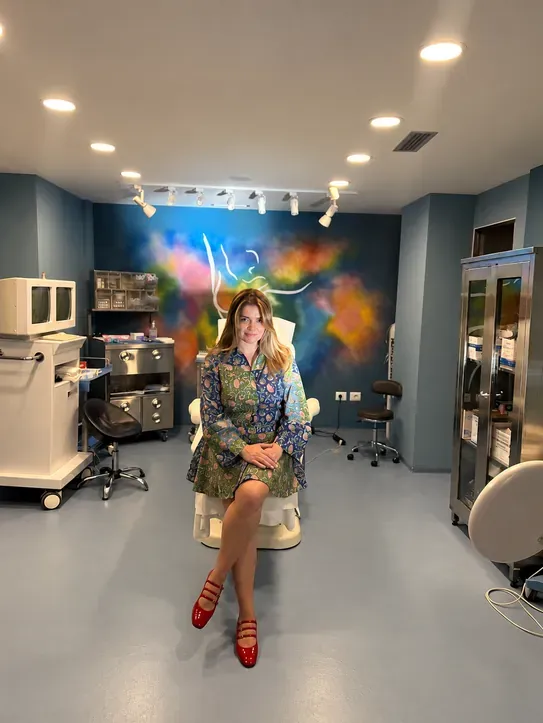
Is Cellulite Mesotherapy right for you? Let’s talk it through together.
A first consultation is not a treatment appointment. Your concern is assessed and the options and their limits are discussed; deciding not to go ahead is also a decision.