DERMAL FILLERS
Tear Trough (Under-Eye) Filler
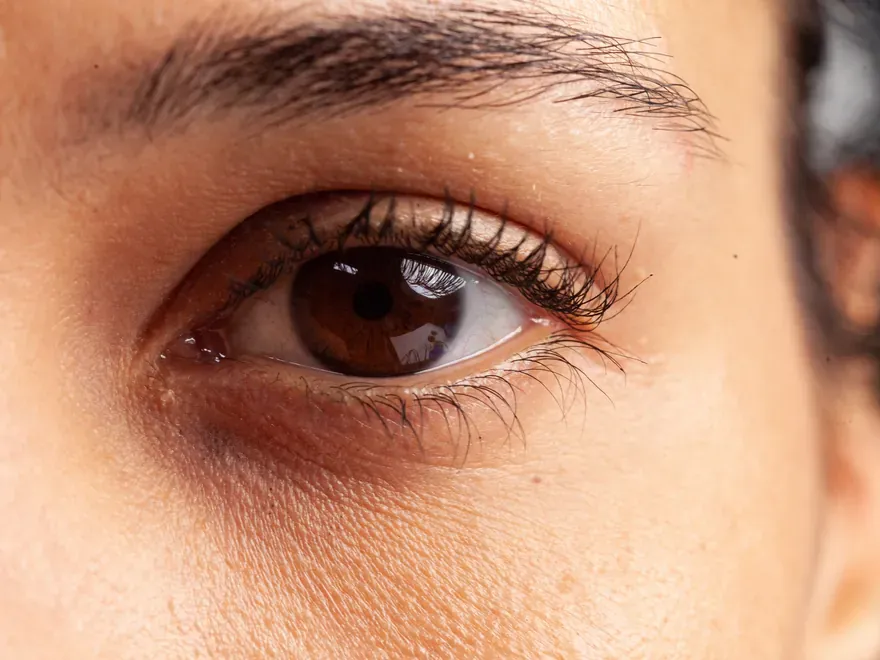
Tear trough (under-eye) filler means supporting the hollow between the lower eyelid and the cheek with a hyaluronic acid (HA) filler. The aim is to add volume and so reduce the shadow that falls over the hollow. The treatment does not target skin colour, pigment or fat bulging in the lower eyelid (fat herniation), and it is not a substitute for lower eyelid surgery.
- TREATMENT GROUP
- Dermal Fillers
- TREATMENT AREAS
- Under-Eye Hollows
- SCIENTIFIC REFERENCES
- 10 publications
APPOINTMENTS
Let’s talk at a consultation about whether Tear Trough (Under-Eye) Filler is right for you, what it involves and its possible risks.
Call usMessage us on WhatsApp+90 530 925 24 78
AT A GLANCE
At this clinic
- Product type
- Hyaluronic acid
- Sessions
- Usually one session
- Treatment time
- About 15–30 minutes
- How long it lasts
- On average 12–18 months, varying from person to person
- Anaesthetic
- A numbing cream (topical anaesthetic) may be applied before the treatment
- Follow-up
- After about 2 weeks
What Is Tear Trough Filler?
Tear trough (under-eye) filler means supporting the hollow in the transition zone between the lower eyelid and the cheek with a hyaluronic acid (HA) filler. The area around the eyes is considered to need particular care, both because of its role in facial expression and because it is one of the places that reveal a person’s age.
The boundaries of this area cannot be drawn with a single line. Three separate structures are described here: the mid-face, the tear trough and the palpebromalar groove. All three are different parts of the same hollow, and which one dominates varies from person to person. The aim of the treatment is to add volume, so reducing the shadow that falls over the hollow and softening the transition between the eyelid and the cheek.
In other words, no brightening substance is injected into the area. The under-eye area looks brighter because there is less shadow.
Where Does the Name ‘Işık Dolgusu’ Come From?
‘Işık dolgusu’ (literally ‘light filler’) is not a medical term; it is a name that has become established in Türkiye in everyday language and in advertising. People looking for this treatment usually search for ‘göz altı ışık dolgusu’ or, written as one word, ‘gözaltı ışık dolgusu’; both mean the same thing.
The ‘ışık’ (‘light’) in the name does not refer to a device, a laser or a special type of substance. When the hollow is supported, the shadow over it is reduced and the area looks brighter; that is where the name comes from.
In medical language, however, this area has no single name; it is referred to through separately defined structures. Once it is clear which structure is involved, the approach changes accordingly. In short, ‘ışık dolgusu’ is not a separate method but the popular name for filler treatment in this area. What is discussed at the consultation is exactly which structure is involved in that area.
When is it considered?
- A hollow at the junction of the lower eyelid and the cheek, and the shadow that falls over it.
- Volume loss that makes the under-eye area look tired or sunken.
- An under-eye hollow accompanying volume loss in the mid-face.
- The groove between the lower eyelid and the cheek (palpebromalar groove) becoming more pronounced.
- This list shows when the treatment may be considered; whether it is suitable for you is assessed at a consultation.
What Causes Under-Eye Hollows?
Under-eye hollows cannot be put down to a single cause; the causes vary from person to person. The main factors are:
- Volume loss in the deep fat compartments (fat pads), especially the fat beneath the muscle that encircles the eye (SOOF) and the cheek (malar) fat.
- Thinning of the skin and loss of its elasticity.
- Downward shift of the superficial fat compartments (fat pads).
- The person’s bone structure: the position of the upper jaw (maxilla) and of the rim of the eye socket determines the shadow that falls on the area.
This has an important consequence: an under-eye hollow is not always a sign of ageing. In someone in their twenties who comes in with this concern, the cause is often the natural structure of their bone and soft tissue.
The hollow also does not come on its own. Under the eye, there are other, separately defined features that overlap with it: malar mounds (swelling over the cheekbone), festoons (bag-like tissue hanging over the cheekbone) and dark circles under the eyes. Which of these dominates determines what can be expected from the treatment.
Dark Circles Are Not Just One Thing
The darkness you see in the mirror is often assumed to be one thing; research shows otherwise. The shadow of the hollow, increased pigment in the skin and changes in skin quality all contribute to the same appearance. The three are not treated the same way, and filler targets only one of them: the shadow.
A step-by-step assessment method developed in this field lists what should be checked at the consultation:
- Visual examination in suitable lighting.
- Separate examination of the cheek and the tear trough.
- Examination of the eye socket rim and the soft tissue by touch.
- Assessing how far forward or back the eyeball sits.
- A separate assessment of pigment and skin quality in the lower eyelid.
According to this method, with a careful, step-by-step assessment, the darkness can be improved in some people without injecting filler directly into the tear trough.
Increased pigment around the eyes is a separate matter. In a study conducted in Iran, the severity of increased pigmentation was significantly associated with family history, stress, long exposure to the sun and to screens, and the use of medicines containing hormones; no significant association was found with sleep quality. The two factors the study highlighted were rubbing the eyes and looking at screens for long periods. The same study found no clear association between atopy (a tendency to allergies) and increased pigmentation; the researchers themselves note that this finding does not agree with earlier studies.
These findings come from a single study’s own group of patients; they do not reflect the population in Türkiye, they are not data from this clinic, and they do not tell you where the darkness under your eyes comes from. The only thing the study shows is this: a method chosen without first identifying the source of the darkness is often the right answer to the wrong question.
First, the Mid-Face Question
There is a clear recommendation on the order in which to approach under-eye hollows: for a natural-looking result, first address volume loss in the mid-face, and if the result is not enough, then treat the under-eye hollow directly. In a survey of practitioners, all participants also agreed that mid-cheek volume is decisive in treating the tear trough.
The reason is simple: the hollow under the eye often does not start under the eye; it deepens as support in the cheekbone area decreases. Filling only the hollow without first providing that support can mean injecting more product than the area can carry. The step-by-step assessment method reaches the same conclusion: in some people, the darkness can be improved without treating the tear trough directly.
It is also stressed that patient selection should be based on specific criteria, and that the expected benefit of the procedure should be weighed against the risk of the product causing irregularities or becoming visible under the skin. The properties needed in a product have also been defined: a smooth, soft material that can adapt to the movements of the area and has a low tendency to hold water. This is a selection criterion, not a product recommendation; the doctor decides which type of product to use, and you can ask about this before the treatment.
Volume loss in the mid-face is covered separately on the Liquid Facelift with Collagen Stimulators page.
Possible Side Effects and Complications
A review that brought together 55 studies on the adverse effects of hyaluronic acid fillers in the face found that the most frequently reported effects were bruising, ischaemia (when tissue is not getting enough blood) and oedema (swelling); the least frequently reported effect was itching. The most serious complications reported include tissue death (necrosis) and vascular occlusion (a blocked blood vessel).
The percentages in this review do not show what percentage of patients had a given effect; they show what percentage of the reviewed studies reported it. The two are not the same thing. Reading these figures as your own risk would mean drawing a meaning from the data that it does not carry, so the individual percentages are not given here. In addition, more than two-thirds of the studies in the review are case series or single case reports, meaning publications that describe individual patients; studies of this kind are not suitable for calculating how often an effect occurs.
Vision loss is a separate matter. Filler-related complications are reported to be increasing as filler use grows worldwide; vision loss is described as a rare but devastating complication. On this subject, a working group set up in the United Kingdom in 2024, with experts in aesthetic medicine, emergency eye care, oculoplastic surgery (surgery around the eye) and retinal medicine, has produced joint consensus guidelines. The guidelines cover:
- Emergency measures to take immediately.
- Routes to specialist care.
- Improving the process of informing patients and obtaining their consent.
- Raising awareness of vision-related complications.
These guidelines show what you also need to know before treatment: having these risks explained to you, and knowing in advance what will be done if a problem occurs, is an essential part of the procedure.
Regulatory Status
For products used at the clinic, the basis is the product’s CE marking, its registration and conformity status in Türkiye, and the manufacturer’s intended purpose and indications. Approval by the US Food and Drug Administration (FDA) is not, on its own, a criterion for assessment; the FDA is the regulatory authority of the United States.
If you are curious about how another country’s regulator views this area: on its information page for consumers, the FDA does not list the area around the eyes among the approved uses of fillers. On the same page, the area around the eyes (periorbital area) is named specifically under the heading ‘unapproved uses’, together with the area between the eyebrows, the nose, the forehead and the neck.
This does not mean that the treatment cannot be carried out in Türkiye or that it is unsafe; it reflects one country’s regulator’s position on its own product approvals. The scope of approval varies from country to country and from product to product. Before the treatment, you can ask what type of product will be used on you and what it is registered for.
SOURCEFDA
Limits of This Treatment
In some situations, filler is not expected to correct the appearance under the eye, and scientific sources list these situations clearly. Some overlapping features under the eye are defined as separate conditions: malar mounds, festoons and dark circles under the eyes. These are not expected to be approached with filler in the same way.
The part of the darkness that comes from pigment is also a separate matter. The step-by-step assessment method calls for pigment and skin quality in the lower eyelid to be assessed separately, because these do not change with volume.
For people with marked fat bulging and excess skin in the lower eyelid, surgical options, including lower eyelid surgery and repositioning of the fat (fat transposition), are defined as a separate group. Filler is not a substitute for these options.
One more limit: hyaluronic acid (HA) fillers are not permanent and break down in the body over time.
Having one of these conditions does not, on its own, mean that the treatment is unsuitable for you; not having any of them does not mean that it is suitable. Whether it is suitable for you is assessed separately at a consultation.
THE CLINIC’S APPROACH
How Is Treatment Planned at This Clinic?
The under-eye area is not assessed on its own; the mid-face and cheek support are assessed first. If volume loss in the mid-face is affecting how the under-eye area looks, the preferred approach is to support the mid-face first and then reassess what the under-eye area needs.
A hyaluronic acid (HA) filler is used. Depending on the patient’s anatomy and the treatment area, a needle or a cannula (a fine, flexible tube with a blunt tip) may be chosen. The technique is decided by the doctor for each individual, and the patient is given the necessary information.
Before the procedure, you will always be asked about blood thinners, antiplatelet medicines and supplements that can affect bleeding. Do not stop any prescribed medicine on your own. If needed, the procedure is planned or postponed after consulting the relevant doctor. You will be told that there may be an increased risk of bruising and bleeding.
The hyaluronic acid fillers used can be dissolved with hyaluronidase if needed. Hyaluronidase is kept at the clinic.
Skin, Blood Vessels and Lymph in This Area
Its anatomy explains why this area needs particular care.
Skin. Eyelid skin is among the thinnest skin on the body, and it becomes even thinner with age. This is why the likelihood of a product placed beneath it becoming visible or being felt to the touch is different from that in areas with thicker skin.
Blood vessels. The under-eye area and the mid-cheek form a transition zone where bands of connective tissue, blood vessels and fat compartments sit together. To define the treatment area, the course of the blood vessels and nerves supplying the area also needs to be reviewed. The vessels named in this area are the angular artery, the zygomaticofacial artery and the infraorbital artery; the network of vessels here is connected to the inside of the eye socket. The course of the blood vessels is known to vary from person to person, and anatomical features that differ by ethnic background have also been studied separately. For this reason, a layer-by-layer, anatomy-based approach to the area is recommended.
Lymph. Disrupted lymph flow in the lower eyelid and cheekbone area can lead to prolonged oedema (swelling). This is one of the side effects reported specifically for this area.
This information is not given to put you off the treatment, but to explain why the area needs care. Which layer is injected, with which instrument and in what amount depends on the doctor’s own assessment and technique.
Tyndall Effect, Prolonged Oedema and Irregularities
In this area, three problems stand out that are not discussed with the same weight elsewhere on the face.
Tyndall effect. When hyaluronic acid is placed inappropriately in the superficial layer of the skin, a bluish tint can appear in the area. This is an optical effect related to the way the skin scatters light, and it appears more easily here because eyelid skin is thin. Old filler remaining in the area can also contribute to lumpiness, surface irregularity and this discolouration.
Prolonged oedema. Disrupted lymph flow can lead to fluid build-up and prolonged swelling in the lower eyelid and cheekbone area; this is also listed separately among the side effects reported specifically for this area.
Overfilling and surface irregularity. Injecting a large amount of product into a single spot can create an unnatural bulge. Managing overfilling or surface irregularity relies on hyaluronidase, the enzyme that dissolves hyaluronic acid, and on knowing the physical properties (rheology) of the product used. Nodules (small firm lumps) and lumpiness have also been reported among the side effects of hyaluronic acid fillers in the face.
Dissolving filler from a previous treatment is covered separately on the Filler Dissolving page.
Longevity and Reversibility
The data on how long under-eye filler lasts come from a study that retrospectively reviewed the records of 155 patients who had under-eye filler at a single centre between 2007 and 2023. Most of the patients were women, and the average age was 48. The degree of hollowing was graded on a standard scale; most patients improved after treatment, and no significant difference was found between the 6-, 12- and 18-month follow-ups. The researchers interpret this as showing that the effect lasts beyond the commonly reported 6–12 months.
You should also know what kind of study this is: a single-centre, retrospective review of records. Different products were used, the patient group has a particular age and sex distribution, and there is no comparison group. A study like this shows a trend; it does not tell you how long the product under your eyes will last. It is also not this clinic’s own data.
On reversibility, the picture is clearer. Hyaluronic acid (HA) fillers can be dissolved with the enzyme hyaluronidase, and managing overfilling or surface irregularity relies directly on this enzyme and on knowing the product’s physical properties. This is why the type of product injected into the area is an important question.
Dissolving filler is covered separately on the Filler Dissolving page.
Limits of the Research
In this field, the subject is discussed in more certain terms than the scientific evidence allows. That is why it is important for you to know how solid the sources behind the information here are.
A review of injection techniques in the under-eye and mid-cheek area is a qualitative summary of existing publications: no new patient data were collected, no PRISMA flow diagram (the screening diagram used in systematic reviews) was produced, and no quantitative meta-analysis was carried out. The authors themselves state this limitation clearly; the suggestion that a layer-by-layer, anatomy-based approach may improve predictability and safety also rests on this basis.
The picture is similar in the review of adverse effects: more than two-thirds of the studies it examined are case series or single case reports.
The consensus guidelines on vision loss also report their own level of evidence as level V, meaning they are based on the shared opinion of experts.
In practice, this means that the information you read here is not presented in more certain terms than its sources. If you read a statement, here or anywhere else, that promises you a result, speaks with certainty about how long it will last or dismisses a risk, it is not backed by this scientific evidence.
How the Decision Is Made
At your consultation, the order is clear: first what can be done, then what cannot. If the second is skipped, the first is incomplete.
The under-eye area is not one where a single treatment is the single answer. Behind the darkness you see in the mirror there may be the shadow of a hollow, pigment, a change in skin quality or fat bulging in the lower eyelid. These can also occur together. A decision made without identifying which of these dominates often ends with a result that does not match expectations; and in this area, reversing a result is a longer and more tiring process than in other areas.
Setting out a treatment’s limits openly, rather than hiding them, completes the information available to the person making the decision; this is also why the regulatory status is covered separately.
What is written here is general information and is not a substitute for a consultation. Your doctor assesses and advises; the decision is yours. This decision also includes choosing another approach or having no treatment at all.
LIMITS
What this treatment
does not do
Tear trough filler does not change skin tone: if the darkness comes from pigment or from colour showing through from blood vessels, filler does not change that colour. If there is marked fat bulging in the lower eyelid, excess skin, malar mounds (swelling over the cheekbone) or festoons (bag-like tissue hanging over the cheekbone), filler on its own is not expected to correct this appearance; surgical options are described for these conditions. Hyaluronic acid (HA) fillers are not permanent; they break down in the body over time. The treatment is not a substitute for lower eyelid surgery.
Who should not have this treatment?
Not suitable
- Pregnancy and breastfeeding
- An active infection in the treatment area
- A known allergy to the product to be used
Needs a doctor’s assessment
- Taking blood thinners
- Marked under-eye bags or a tendency to swelling (oedema)
- Previous treatments around the eyes
Age limit
18 years and over. For people under 18, special cases where there is a medical need are considered separately, with a doctor’s assessment and the consent of a legal guardian.
Aftercare
- Make-up is not recommended for the first 24 hours.
- For a few days, avoid strenuous exercise, saunas, steam rooms or hammams, and extreme heat.
- Do not rub the area around the eyes or put pressure on it.
- A follow-up visit takes place after about 2 weeks.
WHEN TO CONTACT US STRAIGHT AWAY
If you have severe pain, blanching (the skin turning pale or white) or marked discolouration, unusual swelling, and especially blurred vision, vision loss or any other sudden change in vision, you need urgent medical assessment and you must tell the clinic immediately.
FAQs
What is tear trough (under-eye) filler?
Tear trough (under-eye) filler, known in Türkiye as ‘ışık dolgusu’ (literally ‘light filler’), means supporting the hollow between the lower eyelid and the cheek with a hyaluronic acid (HA) filler. In medical language, this area is described under separate names: the under-eye hollow (infraorbital hollow), the tear trough and the palpebromalar groove. The ‘light’ in the name does not refer to a device, a laser or a special type of substance: when the hollow is supported, the shadow over it is reduced and the area looks brighter, which is where the name comes from. (PMID 41018152)Is ‘ışık dolgusu’ the same as under-eye filler?
Yes, in everyday use both refer to the same treatment. ‘Işık dolgusu’ (literally ‘light filler’) is not a medical term; it is a name that has become established in advertising in Türkiye. In medical language, treatments in this area are discussed under the headings of under-eye hollows and the tear trough, and the area is assessed not as a single structure but as separate structures. That is why what is discussed at the consultation is not the name of the treatment but exactly which structure is involved in the area. (PMID 41018152)Will tear trough filler get rid of the dark circles under my eyes?
It depends on the cause of the darkness. Filler targets only one component of the darkness: the shadow of the hollow itself. If the darkness comes from increased pigment in the skin or from a change in skin quality, filler does not change that colour. A step-by-step assessment method has been described to make this distinction: visual examination in suitable lighting, separate examination of the cheek and the tear trough, examination of the eye socket rim by touch, assessing the position of the eyeball, and a separate assessment of pigment and skin quality in the lower eyelid. According to this method, with a careful assessment, the darkness can be improved in some people without injecting filler directly into the tear trough. Increased pigment around the eyes is a separate matter; in one study, it was significantly associated with family history, stress, long exposure to the sun and to screens, and the use of medicines containing hormones. Which component dominates is identified at the consultation. (PMID 38489829 · PMID 39924458)How much does tear trough filler cost?
This page does not include prices. Promotion and information about health services may not include information on prices, discounts, special offers or promotions (Regulation on Promotion and Information Activities in Health Services, Türkiye; Official Gazette, 12 November 2025, No. 33075). The scope of the treatment also varies from person to person: which component is causing the appearance under your eyes, and what plan will be used, only become clear after a consultation.
References
- Dermal Fillers (Soft Tissue Fillers) · FDA
- Infraorbital Hollow Rejuvenation: Considerations, Complications, and the Contributions of Midface Volumization · PMID 36998744
- Optimizing Infraorbital Hollows Treatment With Hyaluronic Acid Fillers: Overview of Anatomy, Injection Techniques, and Product Considerations · PMID 41018152
- Anatomical-based filler injection techniques for the midcheek groove and infraorbital region: Narrative review · PMID 41583410
- Anatomical-Based Filler Injection Diagnosis to Treatment Techniques: Infraorbital Groove and Hollowness · PMID 40003646
- Lower Eyelid Dark Circles (Tear Trough and Lid-Cheek Junction): A Stepwise Assessment Framework · PMID 38489829
- Adverse reactions and complications caused by hyaluronic acid injections in the face: A scoping review · PMID 42525051
- Consensus Guidelines for the Management of Tissue Filler-Induced Vision Loss in the United Kingdom · PMID 41490283
- Long-Term Effects of Tear Trough Hyaluronic Acid Filler: A Retrospective Study · PMID 41446717
- The Frequency of Periorbital Hyperpigmentation Risk Factors. · PMID 39924458A correction notice (erratum) has been published (PMID 40536126); the correction concerns only the order of the authors, and the findings are unchanged.
The information on this page is for general information only and is not a substitute for medical advice. Diagnosis and treatment require an assessment by a doctor. Last updated:
Read more




FURTHER READING

FIRST CONSULTATION
Is Tear Trough (Under-Eye) Filler right for you? Let’s talk it through together.
A first consultation is not a treatment appointment. Your concern is assessed and the options and their limits are discussed; deciding not to go ahead is also a decision.