COLLAGEN STIMULATORS
Calcium Hydroxylapatite (CaHA)
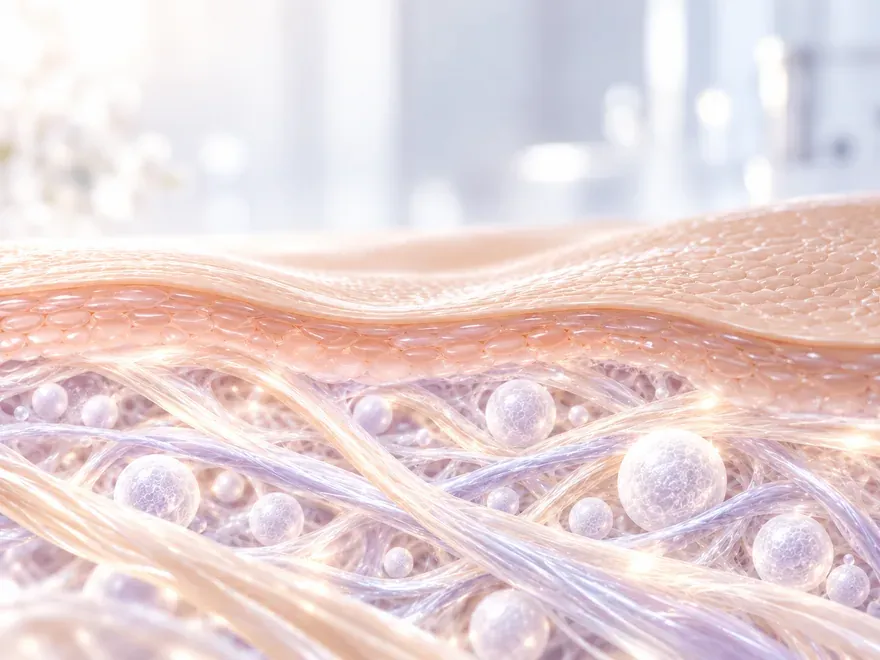
Calcium hydroxylapatite (CaHA) is an injectable substance made of microspheres in a carrier gel. It both adds volume and stimulates collagen production in the tissue. It is not hyaluronic acid; it does not dissolve with the enzyme hyaluronidase, so the result cannot be reversed with an enzyme.
- TREATMENT GROUP
- Collagen Stimulators
- TREATMENT AREAS
- Volume and contourSkin renewal
- SCIENTIFIC REFERENCES
- 26 publications
APPOINTMENTS
Let’s talk at a consultation about whether Calcium Hydroxylapatite (CaHA) is right for you, what it involves and its possible risks.
Call usMessage us on WhatsApp+90 530 925 24 78
AT A GLANCE
At this clinic
- Product type
- Calcium hydroxylapatite (CaHA)
- Sessions
- Usually 1–3 sessions; varies with the product and your needs
- Treatment time
- About 20–45 minutes
- How long it lasts
- About 12–24 months, depending on the product and individual factors
- Anaesthetic
- Numbing cream (topical anaesthetic) or local anaesthetic if needed
- Follow-up
- Usually within 4–8 weeks
CaHA, PLLA and hybrid products can differ in when the effect starts, the session protocol and how long the results last.
What is calcium hydroxylapatite (CaHA)?
CaHA is short for calcium hydroxylapatite, a filler that is injected under the skin. It is a synthetic product made of minerals that occur naturally in bone and teeth; it is not of animal origin. It both adds volume and stimulates the tissue's own collagen production.
The product has two components: calcium hydroxylapatite microspheres and a gel called sodium carboxymethylcellulose, which carries them. According to research on collagen stimulators, the microspheres give structural support immediately after treatment; at the same time, they act as a biological scaffold for new collagen formation.
CaHA is not a permanent filler. It is a substance that the body can break down over time, and together with poly-L-lactic acid it is classed as a semi-permanent filler. These substances are broken down by water (hydrolysis) and by enzymes from the cells involved in breaking down bone. They usually stay in the tissue for up to two years; in individual patients, periods of more than five years have also been reported.
You can also find its use for volume and support in the face on the Liquid Facelift with Collagen Stimulators page, and its use for skin quality outside the face on the Collagen Stimulator Treatments page.
SOURCEPMID 24301235PMID 33408497PMID 42297014PMID 28247924PMID 39649762
When is it considered?
- Volume loss and a need for contour support in the mid-face and lower face.
- Moderate and deep folds, such as nasolabial folds (the lines that run from the side of the nose to the corners of the mouth).
- Volume loss in the backs of the hands.
- Skin laxity and loss of skin quality on the neck, décolletage and upper arms (diluted use).
- Wrinkles on the décolletage (diluted use).
- This list shows when the treatment may be considered; whether it is suitable for you is assessed at a consultation.
How does it work?
According to research, CaHA works in two stages. First, it adds volume immediately after treatment. It then stimulates the tissue (this is called biostimulation), and the collagen formed in this way gives a longer-lasting correction.
Studies show that CaHA increases cell growth, collagen production and new blood vessel formation in the tissue, as well as the formation of elastic fibres and elastin. However, according to a systematic review of 12 studies on this topic, only seven of these studies had a control group; most had methodological weaknesses, and the evidence remains limited.
Experts also stress one point: replacing a single biological component of the tissue is not enough to count a treatment as one that “regenerates tissue”; what matters is the ratio, type and arrangement of the components. In this consensus statement, prepared by six experts, CaHA is mentioned as an example reported to improve the ratio of type I to type III collagen and to stimulate the production of elastin and proteoglycans (one of the building blocks of connective tissue). This is expert opinion, not a controlled study.
What this means for you: part of the change you see after CaHA appears on the day of treatment, and part depends on a tissue response that develops over time. According to experts, a key part of setting the right expectations is to explain in detail, before treatment, that part of the result will appear later.
Undiluted CaHA: volume and contour
The first and most studied use of CaHA is undiluted, at its own consistency, for volume and contour support. The areas considered suitable for this use are the mid-face, the lower face and the backs of the hands. CaHA is a highly viscous and elastic filler, meaning it has a firm consistency that holds its shape.
A systematic review that brought together controlled clinical studies examined 13 studies: 8 on the face and 5 on the backs of the hands. CaHA injection was associated with an increase on the global aesthetic improvement scale in both the face and the backs of the hands, and improvement was reported in areas such as the nasolabial folds and jawline. However, because the studies differed greatly from one another, the results could only be assessed qualitatively, and the review stressed that more controlled studies are needed.
In a combined analysis (meta-analysis) of four randomised controlled trials (trials in which participants are randomly assigned to groups) on nasolabial folds, no significant difference was found between CaHA and hyaluronic acid in blood collecting under the skin (haematoma) or nodules (small, firm lumps you can feel under the skin). This suggests that the two substances behave similarly in this area with regard to these two adverse effects; however, the result is based on only four studies.
The upper third of the face is a separate matter. In a study that retrospectively reviewed the records of 70 patients who had CaHA in the forehead, brows and temples, no serious complications were recorded. Even so, the authors state that the gold standard in this area — the first-choice substance — is hyaluronic acid, and that prospective research is needed to establish the value of CaHA here. You can find details of how each area of the face is approached on the Liquid Facelift with Collagen Stimulators page.
Skin renewal with diluted CaHA
Diluted CaHA means mixing the same substance with a liquid such as saline and injecting it under the skin, spread over a wide area. Here the aim is skin quality and skin laxity rather than volume. The purpose of dilution is to reduce the substance's immediate volumising effect and to increase its spread in the tissue and its interaction with cells, so that collagen and elastin production comes to the fore in the long term.
Consensus guidelines prepared by an international expert panel distinguish between two terms: when one unit of liquid is added to one unit of product, this is called diluted use; when two or more units of liquid are added, it is called highly diluted (hyperdiluted) use. According to the guidelines, this use aims to improve laxity and skin quality in the mid-face and lower face, neck, décolletage, upper arms, abdomen, thighs and buttocks; it can be planned in addition to volumising use or together with other methods.
You should also know the level of evidence for this use. The guidelines describe themselves as preliminary guidelines prepared for a new off-label use of CaHA (outside the manufacturer's intended purpose), and they state that more research is needed. Some of the studies in this area are small: in a pilot study of 20 people on the neck and décolletage, tissue samples (biopsies) showed increases in type I collagen, elastin and blood vessel formation; in 20 patients with neck laxity, improvement was reported at month 3 in ratings based on photographs.
There are few randomised trials. In a multicentre randomised trial of diluted CaHA for décolletage wrinkles, in which the assessors did not know which group participants were in, participants were assigned to two different treatment schedules. When the two groups were assessed together 16 weeks after the last treatment, an improvement of at least one grade on the wrinkle scale was reported in 73.5% of participants.
The consensus guidelines also point out that, in thin skin and darker skin, injecting a less diluted product too superficially can lead to more side effects. In other words, the dilution ratio and the injection depth are not independent decisions. Which preparation is suitable for your skin is assessed at your consultation; you can find area-by-area details on the Collagen Stimulator Treatments page.
RELATEDCollagen Stimulator Treatments
SOURCEPMID 30358631PMID 42303355PMID 28095536PMID 34363289PMID 38954627
Use with hyaluronic acid
In some treatments, CaHA is used together with hyaluronic acid. There are two ways of doing this: carrying out two separate treatments together in the same plan is called combined use, and mixing the two substances directly from syringe to syringe is called hybrid use.
According to a systematic review of these uses, the two substances stimulate collagen production through different molecular pathways. Combined and hybrid treatments were associated with high aesthetic effectiveness and satisfaction in various areas of the face, and with minor adverse effects that resolved on their own. After the sixth month, however, a slight downward trend was seen in both aesthetic improvement and satisfaction.
However, because the studies differed greatly from one another, only a qualitative assessment was possible; better-designed studies are needed for strong, long-term evidence. In short, although this use looks promising, treatment protocols are not yet clearly established.
There is one more detail you should know when deciding: hyaluronic acid is classed as a filler that can be fully reversed with hyaluronidase, whereas CaHA is classed only as an adjustable filler. The summary of the review on these uses does not address what it means for the CaHA component when the hyaluronic acid in the mixture is dissolved with the enzyme. So if a plan involves a mixture, you need to ask separately whether the whole mixture can be reversed.
RELATEDHybrid Collagen Stimulators
Limits of this substance
CaHA provides volume and collagen support; however, it is not suitable for every area or every goal, and if you do not like the result, it cannot be reversed with an enzyme. Removing excess skin or repositioning sagging tissue is not what this substance does, and none of the studies mentioned here compares CaHA with a surgical method.
The first limit concerns the area. A consensus based on both scientific evidence and expert experience recommends not using CaHA in very mobile areas such as the lips, or in areas where there is no room for error, such as around the eyes. The reason is the substance's high viscosity and elasticity — its firm consistency that holds its shape — and the fact that nodules can be more frequent in these areas. You can find information about lip filler on the Lip Filler page.
The second limit concerns reversibility. Hyaluronic acid is regarded as a filler that can be fully reversed with hyaluronidase, whereas CaHA is regarded only as an adjustable filler. Hyaluronidase breaks down hyaluronic acid fillers; CaHA, by contrast, is broken down by water and by enzymes from the cells involved in breaking down bone. You can find the details in the Can it be reversed? section below.
The third limit is the evidence itself. Although there are controlled studies on undiluted use, more controlled studies are needed because of differences between the studies and their methodological limitations. The consensus guidelines published for diluted use describe themselves as preliminary guidelines prepared for an off-label use. This does not mean that CaHA does not work; it shows that how well it works is so far known from a limited number of studies with differing designs.
RELATEDLip Filler
Can it be reversed?
No, CaHA does not dissolve with the enzyme hyaluronidase. Hyaluronidase is an enzyme that breaks down hyaluronic acid fillers. In scientific classification, hyaluronic acid is a filler that can be fully reversed with this enzyme, whereas CaHA is only an adjustable filler. In the body, CaHA is broken down by water (hydrolysis) and by enzymes from the cells involved in breaking down bone.
The search for a dissolving agent for CaHA continues, but the data in this area are experimental. The candidate substance is sodium thiosulfate. In a laboratory and cadaver study, this substance increased breakdown when it came into direct contact with CaHA in the laboratory; however, it did not dissolve CaHA inside the facial arteries of cadavers after 24 hours. A mixture of sodium thiosulfate and hyaluronidase also did not dissolve CaHA inside the blood vessels. The authors concluded that there is no suitable antidote for CaHA that has entered a blood vessel.
In another preclinical study, in pigs, no evidence was found that the microspheres had broken down, and the authors noted that the loss of volume seen may have been due to the substance spreading; in addition, tissue death and bleeding were observed after sodium thiosulfate was given. A review of how fillers break down also states that this substance can stimulate the breakdown of CaHA, but it acts slowly and is not effective in an emergency.
In a case series of three patients with blood vessel problems caused by non-hyaluronic acid fillers, hyaluronidase was added to treatment, and the conditions resolved without tissue death (necrosis) or scarring. The authors put forward the hypothesis that the effect came not from dissolving the filler but from relaxing the narrowed blood vessels. This is a hypothesis based on three cases; it is not an established method of reversal.
At this clinic, for fillers done elsewhere, you are first asked about the type of filler, when it was done and the area; fillers of unknown type, or fillers that cannot be confirmed to be hyaluronic acid, are not dissolved straight away. Where a substance that cannot be dissolved with an enzyme is involved, knowing the type of filler you had before is the starting point for every later decision.
RELATEDFiller Dissolving
SOURCEPMID 24301235PMID 39649762PMID 33544840PMID 33408497PMID 38955457
Does it show up on X-rays and CT scans?
Yes, it can. CaHA is a radiopaque filler, meaning X-rays do not pass through it, and it can leave a trace on imaging. This is not a warning sign but a feature you should know about: a doctor reviewing a future X-ray or scan needs to have this information.
In a study of 58 patients who had CaHA for nasolabial folds or for HIV-related facial fat loss, the substance did not show up consistently on plain X-rays; on computed tomography (CT) done immediately after treatment, however, it was seen in almost all cases. The same study reported that CaHA did not obscure the underlying structures, that there was no sign it had moved, and that it could be told apart from the surrounding bone.
In a study that followed 20 people who had CaHA in the backs of the hands for two years, the substance was seen in 100% of hands on X-rays at month 1 and in 83.3% on X-rays at month 24. At no time point was it found to obscure the bones in a way that would prevent their assessment. This finding shows that the substance can still be seen on X-rays two years later.
A case from a different area of use points the same way: in a patient who had CaHA injected in the vocal cord area, positron emission tomography (PET) showed intense uptake at the injection site, and this appearance lasted for one year. The authors note that this can lead to a misleading, false-positive finding. In practice, this means that if you will have an X-ray, CT or PET scan in the future, it is helpful to tell the doctor reviewing the scan that you have had CaHA.
Known risks
CaHA injection is a medical procedure and it carries risks. In a systematic review of PLLA (poly-L-lactic acid) and CaHA treatments in the face, the most common adverse effects were mild; the main ones were pain and swelling at the injection site. This review also reported a serious case with CaHA: pressure-related tissue death (compression necrosis). The consensus guidelines for diluted use list the injection-related effects as bruising, swelling, mild pain and firmness.
The main problem specific to CaHA is nodules. In a review covering 5,081 treatments in 2,779 patients, 173 adverse events (3%) were reported, and 166 of these (96%) were nodules. Of these nodules, 49% occurred in mobile areas known to have a high tendency to form nodules. According to the authors, most nodules were not visible from the outside and went away without any intervention.
According to a publication that classifies hyaluronic acid and CaHA nodules, the cause of a nodule often lies less in the product itself than in procedure-related factors such as injection technique and bacterial contamination. The authors recommend ruling out common causes such as infection before treating a nodule, and using ultrasound imaging for persistent nodules to identify the location and nature of the material. In a systematic review of foreign body granulomas (inflammatory lumps that the body forms in reaction to a foreign substance) linked to collagen stimulators, CaHA is among the substances for which this condition has been reported; in the cases in the review, the condition was noticed between one week and fifteen years after treatment.
The most serious risk is the substance being injected into an artery by accident. According to an international expert consensus statement on CaHA, this can cause tissue death, permanent scarring, visual impairment and blindness; although it is rare, it needs immediate treatment. In a systematic review of vision loss linked to collagen stimulators, at least 11 cases of vascular occlusion (a blocked blood vessel) causing visual impairment were reported with CaHA; most of these were associated with injections into the bridge of the nose.
Before the procedure, you will be asked about blood thinners, antiplatelet medicines (which stop platelets from clumping together) and supplements that can affect bleeding. Do not stop any prescribed medicine on your own. If needed, the procedure is planned or postponed after consulting the relevant doctor. How much these risks weigh in your case is discussed at your consultation, together with your medical history.
SOURCEPMID 41184662PMID 30358631PMID 28247924PMID 24077011PMID 41132036PMID 32185876PMID 41263987
How are the product and its intended purpose assessed?
The purpose and areas for which a CaHA product can be used depend on the manufacturer's intended purpose and on what the product has been approved for. According to the consensus guidelines for diluted use, CaHA is approved for correcting moderate to severe wrinkles, folds and soft tissue volume loss in the face and hands; using it diluted for skin laxity, however, is off-label.
The history of the substance is also instructive here: CaHA was first approved, and CE-marked in Europe, for non-aesthetic purposes; for a time it was used for aesthetic purposes outside these approvals, and approval for aesthetic use came later. This history is a reminder that the word “approval” always applies to a specific country, a specific area and a specific purpose.
At this clinic, approval from the US Food and Drug Administration (FDA) is not the only criterion when assessing a product; the product's CE marking, its registration and conformity status in Türkiye and the manufacturer's intended purpose form the basis. The doctor chooses a needle or a cannula (a fine tube with a blunt tip) for each person individually, according to the treatment area and the anatomy. Before treatment, you can ask which area and which purpose the product to be used has been approved for.
How the decision is made
There are three things you need to know before deciding about CaHA: the substance both adds volume and starts a tissue response, so part of the result develops over time; it cannot be reversed with hyaluronidase; and it is not suitable for every area. A decision made without knowing these three things is made with incomplete information.
At the consultation, the task is to work out whether the change you see comes from volume loss, skin quality, laxity or another cause. In some cases, CaHA may not be the right answer; hyaluronic acid, another collagen stimulator, a surgical option or doing nothing may be considered. These options are also explained along with their limits, and you are given time to think.
If you have had filler elsewhere before, knowing the product name, the date of treatment and the area is part of this assessment. The information here is general and does not replace a consultation. Your doctor assesses you and makes a recommendation; the decision is yours. This includes a decision to have no treatment at all.
RELATEDVolume Loss or Sagging?
THE CLINIC’S APPROACH
How is treatment planned at this clinic?
For collagen stimulator treatments, your skin quality, tissue loss, laxity and the areas that need treatment are assessed. The suitable product (CaHA, PLLA or a hybrid), the amount and the session plan are decided individually for you.
As well as collagen stimulators such as CaHA and PLLA, the clinic also uses hybrid products that combine hyaluronic acid with collagen-stimulating ingredients. Whether a collagen stimulator can be reversed varies with the product’s ingredients.
LIMITS
What this treatment
does not do
CaHA provides volume and collagen support; it does not remove excess skin, does not reposition sagging tissue and is not a substitute for surgery. Because it is not hyaluronic acid, it does not dissolve with the enzyme hyaluronidase. If you do not like the result, there is no way to reverse it with an enzyme, and the data on the alternative dissolving agents that have been proposed are at an experimental stage. It is not recommended for very mobile areas such as the lips, or for areas where there is no room for error, such as around the eyes. Diluted use is off-label (outside the manufacturer's intended purpose), and the evidence for it is limited. The substance can show up on X-rays and CT scans. Your doctor assesses you; the decision is yours.
Who should not have this treatment?
Not suitable
- Pregnancy
- Active infection or inflammation in the treatment area
Needs a doctor’s assessment
- Bleeding or clotting disorders
- Significant chronic illnesses or immune system disorders
- A marked tendency to scarring or keloids
- Different materials previously used in the area
Aftercare
- For the first 24 hours, you are advised to avoid strenuous exercise, saunas, steam rooms or hammams, extreme heat and any unnecessary pressure on the treated area.
- The need for massage can vary with the CaHA, PLLA or hybrid product used and the technique, so follow only the aftercare protocol your doctor recommends.
WHEN TO CONTACT US STRAIGHT AWAY
Contact the clinic if you have pain, swelling or redness that is worse than expected or keeps increasing, marked discolouration, or any unusual reaction. If you have a severe allergic reaction, difficulty breathing or serious symptoms that come on suddenly, call 112.
FAQs
Is CaHA a filler or a collagen stimulator?
Both. According to research, CaHA microspheres give structural support immediately after treatment and also act as a scaffold for new collagen formation. In other words, it first replaces lost volume straight away, then stimulates the tissue, and the collagen that forms gives a longer-lasting correction. When it is used diluted, the immediate volume effect is smaller and its collagen-stimulating role comes to the fore.Can CaHA be dissolved with hyaluronidase?
No. Hyaluronidase is an enzyme that breaks down hyaluronic acid fillers; hyaluronic acid is classed as a filler that can be fully reversed with this enzyme, whereas CaHA is classed only as an adjustable filler. Sodium thiosulfate has been proposed for CaHA, but laboratory, cadaver and animal studies with it have given inconsistent results; according to a review of how fillers break down, this substance acts slowly and is not effective in an emergency. This is why the fact that CaHA cannot be reversed is something you need to know before you decide.What is the difference between diluted and undiluted CaHA?
The substance is the same; the aim is different. Undiluted CaHA is used at its own consistency for volume and contour support. Diluted or highly diluted CaHA is mixed with a liquid and injected under the skin over a wider area; the aim is not volume but skin quality and laxity. The consensus guidelines define this second use as off-label and describe themselves as preliminary guidelines; some of the studies in this area are small.Can CaHA be used in the lips?
It is not recommended. A consensus based on scientific evidence and expert experience recommends not using CaHA in very mobile areas such as the lips, or in areas where there is no room for error, such as around the eyes; the reason is that nodules can be more frequent in these areas. A systematic review of foreign body granulomas linked to collagen stimulators also reported the area around the mouth as a high-risk area.Does CaHA show up on X-rays or CT scans?
It can. CaHA is a filler that X-rays do not pass through (radiopaque). In a facial study, the substance did not show up consistently on plain X-rays, but it was seen on computed tomography (CT) in almost all cases and could be told apart from the surrounding bone. In a study on the backs of the hands, it was still seen on X-rays at month 24, but it did not prevent assessment of the bones. If you will have imaging in the future, it is helpful to tell the doctor reviewing the scan that you have had CaHA.How long does CaHA stay in the body?
There is no single fixed duration; studies report different durations. In a systematic review of PLLA and CaHA in the face, results with CaHA were reported to last 12–18 months. CaHA is classed as a semi-permanent filler; this group usually stays in the tissue for up to two years, and periods of more than five years have also been reported in individual patients. These durations come from studies and do not tell you what your own result will be; the duration you can expect is discussed at your consultation.What are the most common side effects?
The most common side effects are mild; in studies of facial treatments, the main ones are pain and swelling at the injection site. The problem specific to CaHA is nodules: in a review of safety data, the great majority of reported adverse events were nodules, and most nodules were not visible from the outside and went away without any intervention. A rare but serious risk is the substance being injected into a blood vessel by accident; this can cause tissue death and vision loss.
References
- Aesthetic applications of calcium hydroxylapatite volumizing filler: an evidence-based review and discussion of current concepts: (part 1 of 2) · PMID 24301235
- Can Sodium Thiosulfate Act as a Reversal Agent for Calcium Hydroxylapatite Filler? Results of a Preclinical Study · PMID 33408497
- Biostimulatory Injectables for Collagen Stimulation · PMID 42297014
- Calcium hydroxylapatite: A review on safety and complications · PMID 28247924
- Spontaneous and induced degradation of dermal fillers: A review · PMID 39649762
- Skin regeneration-related mechanisms of Calcium Hydroxylapatite (CaHA): a systematic review · PMID 37332763
- Consensus Agreements on Regenerative Aesthetics: A Focus on Regenerative Biostimulation With Calcium Hydroxylapatite · PMID 39480041
- Calcium Hydroxylapatite (CaHA) and Aesthetic Outcomes: A Systematic Review of Controlled Clinical Trials · PMID 38541911
- Complications from Nasolabial Fold Injection of Calcium Hydroxylapatite for Facial Soft-Tissue Augmentation: A Systematic Review and Meta-Analysis · PMID 27178901
- Use of calcium hydroxylapatite in the upper third of the face: Retrospective analysis of techniques, dilutions and adverse events · PMID 30362225
- Global Consensus Guidelines for the Injection of Diluted and Hyperdiluted Calcium Hydroxylapatite for Skin Tightening · PMID 30358631correction notice (erratum): PMID 30724861
- Hyperdilute Calcium Hydroxylapatite for Skin Quality and Contour: Clinical Applications, Technique, and Practical Considerations · PMID 42303355
- Improved Neocollagenesis and Skin Mechanical Properties After Injection of Diluted Calcium Hydroxylapatite in the Neck and Décolletage:A Pilot Study · PMID 28095536
- Hyperdiluted calcium hydroxylapatite for the treatment of skin laxity of the neck · PMID 34363289
- A Prospective, Multicenter, Evaluator-Blinded, Randomized Study of Diluted Calcium Hydroxylapatite to Treat Decollete Wrinkles · PMID 38954627
- Combined and Hybrid Treatments of Hyaluronic Acid (HA) and Calcium Hydroxylapatite (CaHA): A Systematic Review of Mechanisms of Action, Aesthetic Effectiveness, Satisfaction, and Safety Profile · PMID 40481158
- Intraarterial Degradation of Calcium Hydroxylapatite Using Sodium Thiosulfate - An In Vitro and Cadaveric Study · PMID 33544840
- Intralesional hyaluronidase injection to relieve non-hyaluronic acid filler-induced vascular adverse events · PMID 38955457
- Radiographic and computed tomographic studies of calcium hydroxylapatite for treatment of HIV-associated facial lipoatrophy and correction of nasolabial folds · PMID 18547186
- Aesthetic Implantation of Calcium Hydroxylapatite Does Not Interfere With Radiological Assessment of Bones in the Dorsum of the Hands · PMID 36573029
- Radiographic properties of injected calcium hydroxylapatite: potential false positive findings on positron emission tomography · PMID 18346300
- Efficacy, Durability, and Safety of Collagen Biostimulators Based on Poly-L-Lactic Acid (PLLA) and Calcium Hydroxyapatite (CaHA) in the Face: A Systematic Review · PMID 41184662
- A problem-oriented approach to nodular complications from hyaluronic acid and calcium hydroxylapatite fillers: classification and recommendations for treatment · PMID 24077011
- Foreign Body Granulomas Reaction Related to Collagen Stimulatory Cosmetic Fillers: A Systematic Review · PMID 41132036
- Managing intravascular complications following treatment with calcium hydroxylapatite: An expert consensus · PMID 32185876
- Visual Loss in Biostimulator Injectables: A Review of Incidence, Risk Factors, Etiology and Management Proposal · PMID 41263987
The information on this page is for general information only and is not a substitute for medical advice. Diagnosis and treatment require an assessment by a doctor. Last updated:
Read more


FIRST CONSULTATION
Is Calcium Hydroxylapatite (CaHA) right for you? Let’s talk it through together.
A first consultation is not a treatment appointment. Your concern is assessed and the options and their limits are discussed; deciding not to go ahead is also a decision.