THREAD LIFTING
Lower Face & Jawline Thread Lift
A lower face and jawline thread lift uses dissolvable, barbed medical threads placed under the skin along the jawline to support sagging tissue upwards. It is intended for mild to moderate sagging. It does not remove excess skin and is not a substitute for a surgical facelift.

- TREATMENT GROUP
- Thread Lifting
- TREATMENT AREAS
- JowlsCorners of the mouth
- SCIENTIFIC REFERENCES
- 24 publications
APPOINTMENTS
Let’s talk at a consultation about whether Lower Face & Jawline Thread Lift is right for you, what it involves and its possible risks.
Call usMessage us on WhatsApp+90 530 925 24 78
AT A GLANCE
At this clinic
- Product type
- Absorbable medical threads (PDO / PLLA, etc.)
- Sessions
- Usually 1 session
- Treatment time
- About 30–45 minutes
- How long it lasts
- Varies with the threads used, the treated area and individual factors; on average 3–4 years
- Anaesthetic
- Local anaesthetic
- Follow-up
- Usually after 2–4 weeks
The type of thread, the number of threads and the technique vary with the area treated.
What Is a Lower Face & Jawline Thread Lift?
In a lower face and jawline thread lift, medical threads with small barbs on their surface that grip the tissue are placed under the skin along the lower jawline, and the sagging tissue is supported upwards and backwards. The aim is to reduce the sagging that gathers outside the corners of the mouth and to make the edge of the jawline defined again.
In a thread lift, barbed threads are placed along set lines and lift the superficial layer of muscle and connective tissue in the face (SMAS, superficial musculoaponeurotic system). In one technique described for the lower jaw border, the threads are passed along the septum of the lower jaw using a thin, hollow tube called a cannula. The inner and outer sides of the jawline are treated together, and the platysma-auricular ligament is used as an anchor point.
Clinical data specific to this area are scarce. A pilot study included eight people with mild to moderate sagging along the jawline, who had a lift with threads containing poly-lactic acid and polycaprolactone. After the lift, a significant improvement was reported in three-dimensional photographic measurements of the distances from the tragus (the small projection in front of the ear) to the marionette line (the line running down from the corner of the mouth) and to the jowl. Patients were followed up for an average of 8.16 months. The study is small and observational, and it has no control group; its results are not enough to generalise to a wide group of patients.
This clinic uses dissolvable threads (PLLA/PDO). ‘Thread lift’ is the general name for lifting treatments carried out with threads; the French Thread Lift is one of the techniques within these methods. A lower face and jawline thread lift is the form of this general approach aimed at the lower face and jawline.
RELATEDFrench Thread Lift
What Do ‘Jowls’ and ‘Jawline’ Mean?
‘Jawline’ means the line of the lower jaw; ‘jowls’ are the sagging that forms over this line, just outside the corners of the mouth. They are not the same thing: one describes a line, the other the excess tissue that breaks up that line.
The jawline runs from the tip of the chin along the lower edge of the jawbone to the angle of the jaw in front of the ear. Turkish has no single established word for ‘jowl’; the Turkish version of this page calls it ‘çene kenarı sarkması’ (sagging at the edge of the jaw). According to an anatomical description based on a cadaver study, jowls lie in the tissues over the jawbone, just outside the level of the corners of the mouth. As jowls become more noticeable, the straight edge of the jawline is broken up and looks interrupted.
According to the same study, visible jowls are one of the reasons people consider lower face rejuvenation surgery. Non-surgical methods are also considered for this problem. Which approach makes sense depends on how severe the sagging is, and this is determined at a consultation, not from a photograph.
A double chin is a separate area: it refers to fullness under the chin (the submental area) and is not what this treatment addresses. Thread lifting of the neck and the area under the chin, with its own anatomy and limits, is described on the Neck Thread Lift page.
RELATEDNeck Thread Lift
SOURCEPMID 36050569
When is it considered?
- Mild or moderate sagging along the jawline, outside the corners of the mouth (jowls).
- Loss of definition along the lower jawline.
- Lines and shadows around the corners of the mouth that accompany sagging.
- Considering a non-surgical option for age-related loosening of the lower face.
- This list shows when the treatment may be considered; whether it is suitable for you is assessed at a consultation.
How Do Jowls Form?
Jowls are an excess of skin and subcutaneous tissue that forms outside the corners of the mouth as the connective tissue under the skin stretches with age. An anatomical study on cadavers showed that jowls form in the subcutaneous layer, over the rear part of the lower jaw ligament (mandibular ligament).
According to the same study, the tissues in this area are built to move largely independently of the lower jaw, so that the mouth can open wide. The connective tissue under the skin, which is short and elastic in youth, stretches and loosens with age; as a result, excess forms in the skin and the tissue beneath it. According to the researchers, jowls are this excess itself; in other words, they are linked more to the stretching and excess of tissue than to a lack of volume.
Jowls also have a lower boundary. Another study on cadavers showed that the septum of the lower jaw (mandibular septum) and the platysma-mandibular ligament form one continuous structure that acts as a support, limiting how far jowl fat can descend towards the neck. For this reason, jowls and fullness under the chin lie in neighbouring but separate compartments.
A study of tissue mechanics points to a similar picture: in computer models, jowls formed only when age-related softening of the cheek skin and the subcutaneous tissue was combined with changes in the skin’s connecting structures; none of these was enough on its own. This suggests that jowls are not a single-layer problem. However, the finding comes from a computational model; it does not directly show which treatment will work, or to what extent.
RELATEDWhy does the face sag?
Corners of the Mouth and Marionette Lines
The lines running down from the corners of the mouth (marionette lines) often appear together with jowls, but they do not have a single cause. According to a review of these lines, bone loss, gravity, changes in the fat compartments, muscle pressure, the pull of ligaments and skin ageing all play a part together.
The options listed for this area are fillers, botulinum toxin, surgery to reduce fat and thread lifting. Botulinum toxin, which weakens certain facial muscles, can reduce the downward pull. These procedures require care around structures such as the facial artery and the mental nerve (the nerve that supplies feeling to the skin of the lower lip and chin).
A retrospective study of 369 people looked at two groups: one had a thread lift and the other a short-incision facelift. In the thread lift group, satisfaction differed depending on where the threads were placed: satisfaction with the appearance of the marionette line area was higher than with the nose-to-mouth lines (nasolabial folds). This is a group average; it does not predict your result.
Whether a line comes from sagging, volume loss or muscle movement cannot be told at a glance, and they are not all treated the same way. If sagging is the main factor, a thread lift may be discussed; if volume loss is, fillers; if muscle pull is, botulinum toxin. Most faces have a combination of these; the distinction is made at a consultation.
RELATEDMarionette Line Filler
How Is It Different from Jawline Filler?
A jawline thread lift and jawline filler are used along the same line but address different problems: the thread lift aims to support tissue that has shifted, while filler aims to support lost volume and contour. One concerns the position of the tissue, the other its amount.
According to a review of filler use in the chin and jawline, skin laxity and soft tissue sagging in the lower jaw area can lead to jowls, a drooping chin tip and reduced forward projection of the chin. This review covers different filler materials, including hyaluronic acid and collagen stimulators (substances intended to increase the skin’s collagen production); in other words, sources in the filler field also recognise sagging as one of the problems in this area.
The hollow just in front of the jowls (the prejowl groove) is a good example of this distinction. A retrospective review comparing two groups of 25 facelift patients each concluded that the hollowing in this groove is more likely to come from thinning of the tissue under the skin than from the pull of a ligament. In the same study, adding volume was associated with more improvement in the jowls and fewer unwanted results than releasing the ligament. However, the study was done in surgical patients and used fat transfer; it does not give a direct result for fillers.
The same face can have both sagging and volume loss. Which one is the main factor, and which methods may be considered, in what order or in combination, is determined at a consultation.
RELATEDChin and Jawline Filler
How Is It Different from the Nefertiti Lift?
In the treatment known as the Nefertiti lift, no threads or filler are placed along the jawline; the aim is to relax the platysma muscle in the neck with botulinum toxin. In everyday language, the substance is often called Botox®, which is a product name; its medical name is botulinum toxin. Although the two treatments aim for a visible result along the same line, they target different structures.
According to an expert consensus (an agreed view reached by a group of experts) on the use of botulinum toxin in the lower face muscles, the uses described for the platysma muscle are neck bands, reshaping the jawline and improving skin texture. The same study stresses that, because the lower face muscles have important functions, treatment in this area is difficult and increases the risk of side effects and complications.
In short, the three methods work through different mechanisms along the jawline: a thread lift targets the position of the tissue, filler targets volume and contour, and botulinum toxin targets muscle pull. Which one stands out in your case depends on why your jawline has changed. If only threads are planned where muscle pull is the main factor, or only a muscle-relaxing treatment where sagging is the main factor, the result may not meet expectations.
RELATEDBotulinum Toxin for the Jawline and Neck (Nefertiti Lift)
SOURCEPMID 42646760
What Does the Evidence Say, and How Long Does It Last?
Data on the effect of thread lifting in the lower face and jawline are limited, and it is unclear how long the effect lasts. According to a systematic review of the subject, no substantial evidence supporting the method’s effectiveness or safety has been added in the past ten years; in the publications reviewed, except for two studies, the lifting effect lasted only for a very limited time. The two studies with positive results were supported by the companies that make the threads.
A later review reached a similar conclusion: although the method looks promising, no new evidence supporting its use has been added. The researchers stress that anyone considering this procedure should be well informed about side effects, how long the effect lasts and the limited data on effectiveness.
More recent studies based on measurements are also small or observational. In a study comparing photographs of a total of 143 people taken sitting up and lying down, the shift of soft tissue between the two positions, seen from the front, measured 14.1% in the group who had a thread lift and 20.8% in the untreated group. The groups were made up of different people. The finding shows that the tissue moved less with changes in position; it does not show how much the sagging improved or how long the effect will last.
In the retrospective study of 369 people, which included a thread lift group and a short-incision facelift group, the effect of thread lifting was found to be limited at an average follow-up of two and a half years; the researchers expressed this as looking about 2.3 years younger. In the pilot study specific to the jawline, the average follow-up was around eight months. These figures are not a promise of how long the effect will last; they do not tell you how long it will last for you.
RELATEDFillers or a Thread Lift?
SOURCEPMID 29481392PMID 33471152PMID 41142878PMID 36134172PMID 34084008
Limits of this treatment
A lower face and jawline thread lift supports sagging along the jawline only to a limited extent; it does not get rid of pronounced jowls or excess skin. A thread lift usually does not require surgical incisions, and no skin is removed; anatomically, however, jowls are the excess in the skin and subcutaneous tissue itself.
Studies specific to the jawline have been done in people with mild to moderate sagging; what threads can do in advanced sagging has not been tested in these studies. A review of facelift and neck lift methods describes surgical approaches to the platysma muscle and the structures beneath it for correcting the contour of the jawline and neck; facelifts and neck lifts are treated as the main methods of facial rejuvenation.
Comparative data point in the same direction. In the retrospective study of 369 people, which included a thread lift group and a short-incision facelift group, satisfaction on social and psychological function scales was higher in the short-incision facelift group. However, the groups were not randomly assigned; so the finding is not firm proof that one is better, but a pointer from a comparison.
Whether you might consider surgery in the future also needs to be discussed. In a retrospective study in which a single surgeon reviewed 180 neck lift operations, patients who had previously had non-surgical neck treatments, including thread lifts, showed fibrosis (hardening of the tissue), loss of the planes between tissue layers and unpredictable fat distribution during surgery, and the operations took longer. Because the study looked at more than one type of treatment together, these findings are not specific to threads.
A thread lift does not replace lost volume and does not relax the pull of the platysma muscle; these are the role of fillers and botulinum toxin. The treatment is not a substitute for a surgical facelift. These limits do not mean the method should not be used; they help you set your expectations realistically. Your doctor assesses you; the decision is yours.
SOURCEPMID 36050569PMID 34084008PMID 40566019PMID 36134172PMID 40712094
Nerves, Blood Vessels and Glands in This Area
Near the layer the threads pass through along the jawline lie a branch of the facial nerve, the facial artery and the salivary glands; much of the safety of a thread lift depends on the position of these structures. A review of the anatomical basis of thread lifting stresses the need for care around blood vessels, branches of the facial nerve, fat compartments and retaining ligaments; nerve injury can result in facial weakness or paralysis. Another review of complications lists injury to the parotid gland (the large salivary gland in front of the ear) among problems that are rare but difficult to treat.
The key structure in this area is the marginal mandibular nerve, which works the facial expression muscles around the lower lip. A meta-analysis (an analysis combining data from many studies) covering 1,861 sides of the face found that in 39% of cases at least one branch of this nerve dipped below the lower edge of the jaw. A review of the nerve’s course stresses that this course varies from person to person and that the usual distance rule does not reliably protect the nerve.
A study on cadavers reported that, at the level of the angle of the jaw, this nerve passes beneath the septum of the lower jaw and becomes deeper at the front edge of the chewing muscle (masseter), and that the risk of injury may be higher at this point. For the thread technique aimed at the lower jaw border, particular care is also recommended around this nerve and the blood vessels near the notch on the edge of the lower jaw (antegonial notch).
This information is not given to put you off, but to show why this area needs care. Which layer the threads are placed in, in which direction and how many are used depends on the doctor’s assessment and technique; you can ask about the reasons for this decision at your consultation.
SOURCEPMID 39376117PMID 39760325PMID 42739192PMID 42056850PMID 39907456
Known risks
The most common side effects of a thread lift are swelling, bruising and tenderness. Visible or palpable threads (threads you can see or feel under the skin), skin dimpling and thread migration (the thread moving out of place) can appear later on. A meta-analysis combining 26 studies and 2,827 patients reported swelling in 34%, bruising in 26%, visible or palpable threads in 10% and skin dimpling in 7%; the variation between the studies’ results was high.
In a systematic review of dissolvable threads only (19 studies, 1,406 patients), the least frequently reported problems were haematoma, a collection of blood under the skin (0.64%), altered sensation (1.14%) and infection (2.49%). The same review found that barbed threads were associated with more complications than smooth threads or threads with cones, and threads that were not anchored with more complications than anchored ones.
A retrospective study reviewed 2,000 thread lift cases using polydioxanone (PDO) threads, randomly selected from 105 institutions, and found an overall complication rate of 12.4%. The most common complications were the skin being drawn inwards, asymmetry and pain. A higher number of threads and older age were identified as independent predictors of complications.
A review of complications lists infection, granuloma (inflamed tissue that forms in reaction to a foreign body), thread migration, nerve damage and injury to the parotid gland as problems that are rare but difficult to treat. The jawline lies next to the salivary glands: in a case series of 11 patients who developed obstructive inflammation of a salivary gland after facial rejuvenation procedures, most needed more than one endoscopic procedure (a procedure done with a thin camera). In a single case report, stones and inflammation developed in the parotid gland three years after a thread lift, and thread fragments were found inside the stones. These reports do not show how often this happens; they show that the risk exists.
Before the procedure, you will be asked about blood thinners (anticoagulants), antiplatelet medicines (which stop blood platelets from clumping together) and supplements that can affect bleeding. Do not stop any prescribed medicine on your own. If needed, the procedure is planned or postponed after consulting the relevant doctor. This is why it is important to tell us at your consultation about all the medicines and supplements you take.
RELATEDWhat to look out for after a thread lift
SOURCEPMID 41988336PMID 39442180PMID 42236870PMID 39760325PMID 42132933PMID 42105917
How the decision is made
In the lower face, the decision starts with a question, not a method: is the jawline being changed by sagging, volume loss, muscle pull or excess skin? These four situations do not lead to the same method, and most faces have more than one of them.
The consultation follows a set order: first, what can be done is explained, then what cannot be done. If the second part is skipped, the first is incomplete. The general limits of thread lifting are known; where those limits fall on your face can only be seen at a consultation. A photograph or someone else’s jawline can be a starting point in this discussion, but not a measure.
What you read here is general information and does not replace a consultation. Your doctor assesses and advises; the decision is yours. This decision also includes choosing another approach, getting a surgical opinion or having no treatment at all; all of these are valid decisions, consistent with the information here.
RELATEDVolume Loss or Sagging?
THE CLINIC’S APPROACH
How is treatment planned at this clinic?
For a thread lift, the areas that need treatment are identified by assessing your facial anatomy, tissue structure and the direction of sagging. The thread technique, the number of threads and the directions of placement are planned individually for you; when needed, more than one area can be treated at the same time.
LIMITS
What this treatment
does not do
A lower face and jawline thread lift gives limited, temporary support to mild to moderate sagging along the jawline. It does not get rid of pronounced jowls or excess skin, and it does not remove skin; the options described for these situations are a surgical facelift and a surgical neck lift. It does not replace lost volume, and it does not relax the pull of the platysma muscle in the neck. Data on how long the effect lasts are limited; studies specific to this area are small and have no control group. It is not a substitute for a surgical facelift. Your doctor assesses you; the decision is yours.
Who should not have this treatment?
Not suitable
- Pregnancy
- Active infection in the treatment area
- A serious skin problem in the treatment area
Needs a doctor’s assessment
- Bleeding or clotting disorders
- Taking blood thinners
- Immune system disorders
- Significant chronic illnesses
Whether you are suitable depends on your health and your tissue structure.
Aftercare
- Make-up is not recommended for the first 24 hours.
- For the first week, avoid strenuous exercise, saunas, steam rooms or hammams, intense heat, and massage or pressure on the treated area.
- Especially after a facial thread lift, for about 1 month, limit hard foods, excessive chewing and movements that require you to open your mouth very wide.
WHEN TO CONTACT US STRAIGHT AWAY
Contact the clinic if you notice pain, swelling or redness that is worse than expected or keeps increasing, or anything unusual. In a sudden, serious situation, such as difficulty breathing or a severe allergic reaction, call 112.
FAQs
What is the difference between a jawline thread lift and jawline filler?
A thread lift aims to support sagging tissue, while filler aims to support lost volume. In a thread lift, barbed threads support tissue that has shifted, upwards and backwards, but they do not add volume; jawline filler supports volume and contour with a filler material, but it does not lift sagging tissue. It has been reported that the hollow in front of the jowls may be linked more to thinning of the tissue under the skin than to the pull of a ligament; a situation like this is about volume. The same face can have both; which one is the main factor is determined at a consultation.I have pronounced jowls. Will a thread lift be enough?
Pronounced jowls and excess skin are outside the limits of a thread lift. Studies specific to the jawline have been done in people with mild to moderate sagging; the effect of threads in advanced sagging has not been tested. No skin is removed in a thread lift, whereas jowls are, anatomically, excess in the skin and subcutaneous tissue. The options described for these situations are a surgical facelift and a surgical neck lift. How severe your sagging is will be determined at a consultation, not from a photograph.How long does a jawline thread lift last?
There is no definite answer to this question; the scientific data do not give a clear result on how long the effect lasts. According to a systematic review, in all but two of the studies reviewed, the lifting effect lasted only for a very limited time. In the pilot study specific to the jawline, the average follow-up was around eight months; in a study of 369 people, the effect of thread lifting was found to be limited at an average follow-up of two and a half years. These figures are not a promise of how long the effect will last. What you can expect in your case is discussed at a consultation.What side effects can occur after a jawline thread lift?
The most common side effects are swelling, bruising and tenderness; visible or palpable threads, skin dimpling and thread migration can appear later on. A meta-analysis combining 26 studies reported swelling in 34% and bruising in 26%; the variation between studies was high. Infection, nerve damage and salivary gland injury are rare but serious problems. These figures are averages from published studies, not results from this clinic. What to expect in your case, and your aftercare, will be explained at your consultation.Is the Nefertiti lift the same as a jawline thread lift?
No, they are different treatments. In the treatment known as the Nefertiti lift, the aim is to relax the platysma muscle in the neck with botulinum toxin; no threads or filler are placed along the jawline. An expert consensus on the lower face muscles lists neck bands and reshaping the jawline among the uses described for the platysma. A thread lift, by contrast, targets the position of the tissue. Whether muscle pull or sagging is the main factor for you is determined at a consultation; for some faces, both may be discussed together.Which threads are used, and do they stay in the body?
This clinic uses dissolvable threads (PLLA/PDO). These threads dissolve in the body over time. A systematic review of dissolvable threads only reported that complication rates varied with the material, the surface structure of the thread and the anchoring method. Which thread and technique are preferred for your area is discussed at a consultation.How much does a jawline thread lift cost?
Prices are not given here because price information cannot be shared when promoting health services. The Regulation on Promotion and Information Activities in Health Services (Türkiye) (Official Gazette of 12 November 2025, No. 33075) does not allow prices, discounts, special offers or promotions in promotional and informational content. In addition, the scope of the treatment varies from person to person: which component of the jawline is addressed, and with what plan, only becomes clear after a consultation.
References
- Thread-Lifts: A Double-Edged Suture? A Comprehensive Review of the Literature · PMID 30893160
- Percutaneous Thread Lift Facial Rejuvenation: Literature Review and Evidence-Based Analysis · PMID 33471152
- Thread-Lift Sutures: Still in the Lift? A Systematic Review of the Literature · PMID 29481392
- Anatomic Consideration and Lifting Technique in Mandible Border Line Lifting With Multidirectional Thread · PMID 39907456
- Thread Lifting of the Jawline: A Pilot Study for Quantitative Evaluation · PMID 34084008
- The Surgical Anatomy of the Jowl and the Mandibular Ligament Reassessed · PMID 36050569
- Anatomical Reassessment of the Mandibular Septum: Relationship with The Marginal Mandibular Nerve and Deep Structures of Lower Face · PMID 42056850
- Decoding multiscale mechanisms in facial sagging: Impact of soft tissue deformability, growth, and dermal anchoring on jowl formation · PMID 41101633
- Why do marionette lines appear? Exploring the anatomical perspectives and role of thread-based interventions · PMID 38572585
- Evaluating the Compartment-Specific Effects in Superficial Facial Fat Compartments After Thread-Lifts by the Tensiometer and FACE-Q · PMID 36134172
- Using injectable fillers for chin and jawline rejuvenation · PMID 37383337
- Mandibular Ligament and the Prejowl Sulcus Explained · PMID 39001648
- Italian Consensus and Review in Lower Face Mimetic Muscle Treatment with Botulinum Toxin-A · PMID 42646760
- Posture-based Assessment: Thread Lift Versus High-intensity Focused Ultrasound in Asians · PMID 41142878
- Current Trends in Facelift and Necklift Procedures · PMID 40566019
- Neck Lift After Nonsurgical Treatments: Fibrosis, Fat Loss, and Surgical Complexity · PMID 40712094
- Anatomical Considerations for Thread Lifting Procedure · PMID 39376117
- Course Patterns of the Marginal Mandibular Branch of the Facial Nerve over the Facial Vessels in Relation to the Inferior Mandibular Border · PMID 42739192
- A meta-analysis of complications of thread lifting · PMID 41988336
- An Assessment and Comparison of Adverse Effect Rates in Differing Absorbable Thread Lift Suture Materials · PMID 39442180
- Incidence and Predictors of Complications After Polydioxanone Thread Lift: A Multicenter Retrospective Cohort Study · PMID 42236870
- Facial Thread Lifting Complications · PMID 39760325
- Iatrogenic Obstructive Sialadenitis of the Parotid and Submandibular Glands Following Facial Rejuvenation · PMID 42132933
- Suture remnant-induced sialolithiasis and suppurative parotitis: A delayed complication following facial thread lifting · PMID 42105917
The information on this page is for general information only and is not a substitute for medical advice. Diagnosis and treatment require an assessment by a doctor. Last updated:
Read more





FIRST CONSULTATION
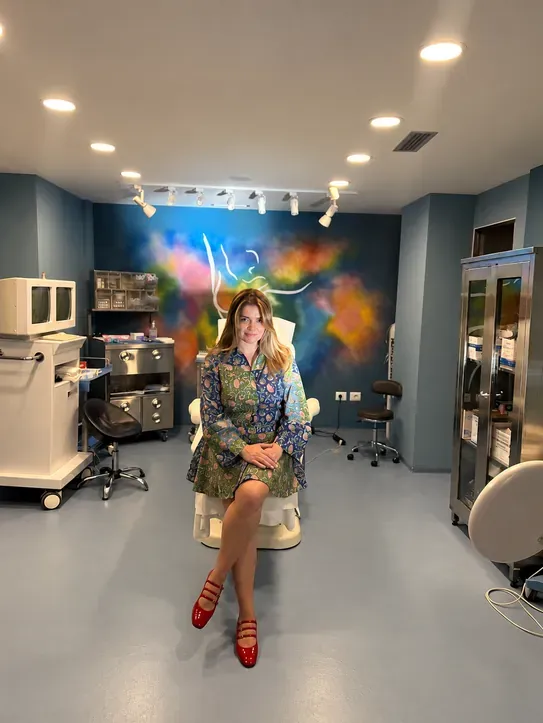
Is Lower Face & Jawline Thread Lift right for you? Let’s talk it through together.
A first consultation is not a treatment appointment. Your concern is assessed and the options and their limits are discussed; deciding not to go ahead is also a decision.