MESOTHERAPY
Hair Mesotherapy
Hair mesotherapy delivers mixtures containing medicines or vitamins into the scalp through small injections with very fine needles. Research focuses mostly on pattern hair loss; the evidence comes from small studies that differ in how the treatment is given. The method does not restore hair roots (follicles) that have been lost.
- TREATMENT GROUP
- Mesotherapy
- TREATMENT AREAS
- Pattern Hair LossTemporary Hair Shedding
- SCIENTIFIC REFERENCES
- 29 publications
APPOINTMENTS
Let’s talk at a consultation about whether Hair Mesotherapy is right for you, what it involves and its possible risks.
Call usMessage us on WhatsApp+90 530 925 24 78
AT A GLANCE
At this clinic
- Product type
- Mesotherapy products chosen according to the aim of the treatment
- Sessions
- Usually as a course, planned according to your needs
- Treatment time
- About 20–30 minutes
- How long it lasts
- Varies with the treatment area, the product and the session protocol
- Anaesthetic
- Numbing cream (topical anaesthetic) if needed
- Follow-up
- According to the session plan
The product used and the session protocol differ from one treatment area to another.
What Is Hair Mesotherapy?
Hair mesotherapy is the delivery of active ingredients into the skin of the scalp (intradermal) through very fine needles and in small amounts. According to research, injecting into the skin can help the substance stay longer in the treated area. This may make it possible to use lower doses and to leave longer intervals between sessions.
Another reason for the method is to reduce the body-wide side effects of medicines. When a medicine is delivered directly into the tissue near the hair roots, its concentration in that area increases and less of it reaches the rest of the body. On the other hand, local side effects and reactions can develop at the injection site.
Mesotherapy is not a technique used only for hair; it is used in different fields, from pain treatment to rehabilitation and dermatology. For a long time this field relied on personal belief; international consensus statements, which reflect the shared view of experts, now aim to set a standard framework and to separate practices supported by evidence from those no longer considered appropriate. According to these statements, high-quality research is still needed. You can find the general definition of mesotherapy and its use on the skin on the Mesotherapy page.
RELATEDMesotherapy
When is it considered?
- Male-pattern hair thinning (pattern hair loss): most research on hair mesotherapy focuses on this condition.
- Female-pattern hair loss: widespread thinning over the middle of the scalp, while the front hairline is usually preserved.
- Situations where local treatment is considered to avoid the body-wide side effects of medicines.
- This list shows when the treatment may be considered; whether it is suitable for you is assessed at a consultation.
Diagnosis First: The Type of Hair Loss
Before considering hair mesotherapy, the first question to answer is what type of hair loss you have. “My hair is falling out” can describe several different conditions, and they do not follow the same course or need the same treatment.
Hair loss is divided into two main groups: non-scarring (non-cicatricial) and scarring (cicatricial). The non-scarring group includes pattern hair loss (androgenetic alopecia), alopecia areata (patchy hair loss), telogen effluvium (temporary hair shedding) and hair-pulling behaviour (trichotillomania). The scarring group includes conditions such as frontal fibrosing alopecia, discoid lupus and lichen planopilaris. The first step in diagnosis is a detailed medical history and examination. Examining the scalp under magnification (trichoscopy) is considered a basic method for all hair disorders; a biopsy is recommended in scarring or uncertain cases.
In female-pattern hair loss, assessment is also based mainly on the medical history and examination; according to an expert consensus statement, every patient should be checked for excess male hormones (androgens). Scarring types of hair loss with a similar distribution cannot always be easily told apart from female-pattern hair loss; a biopsy can be useful in these cases.
This distinction is decisive for hair mesotherapy, because most research on the method focuses on pattern hair loss. When hair loss is scarring, or its cause has not yet been found, injections are not a substitute for a diagnosis. It is also important that your concern is not dismissed: a comprehensive review of telogen effluvium highlights that one of the common mistakes dermatologists make is to play down the patient's concern.
RELATEDWhat Causes Hair Loss?
SOURCEPMID 33290611PMID 30785992PMID 31677111PMID 31686886PMID 35253335PMID 41603616
Pattern Hair Loss
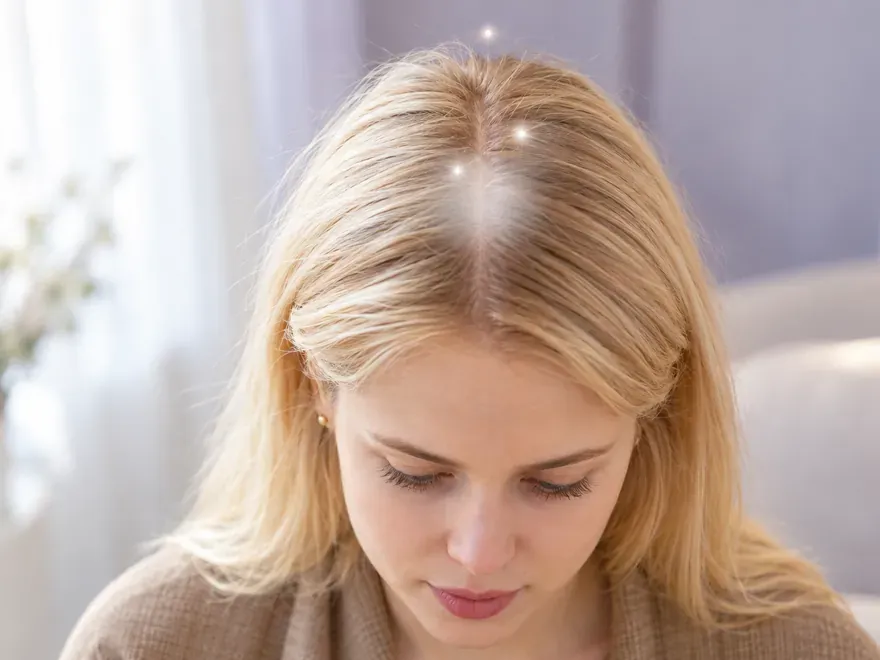
Pattern hair loss (androgenetic alopecia) is a slowly progressive condition in which hair roots shrink and produce increasingly fine hairs. In women, the front hairline is usually preserved and the thinning becomes noticeable over the middle of the scalp. Most hair mesotherapy research focuses on this condition.
A systematic review on this topic brought together twelve studies with a total of 253 men and 274 women. Six of these were randomised controlled trials, meaning participants were randomly assigned to groups and compared. All the studies reported some positive results with mesotherapy, and no major side effects were reported. However, participant numbers are insufficient, and studies comparing mesotherapy with other treatments are lacking.
In a controlled study of 126 women with female-pattern hair loss, 86 were injected with a preparation containing dutasteride (a medicine that blocks the enzyme 5-alpha reductase), and a control group of 40 was injected with saline solution. In the assessment based on photographs, improvement was seen in 62.8% of the dutasteride group and 17.5% of the control group. The response was reported to be better in women who had had the condition for a shorter time. The fact that improvement was also seen in the control group, which received only saline, shows why comparison with a placebo (a dummy treatment) matters in this field.
These results do not make hair mesotherapy a first-line treatment. The expert consensus statement on female-pattern hair loss recommends starting treatment with minoxidil applied to the scalp (topical minoxidil), and adding other medicines in severe hair loss or when there is androgen excess. Research highlights that medical treatments usually take at least six months to produce a clear improvement, and that it is important to make an informed decision about treatment. Whether hair mesotherapy is considered instead of these treatments, alongside them or not at all is decided at a consultation.
SOURCEPMID 31677111PMID 30785992PMID 35253335PMID 22486925PMID 40568688
Temporary Hair Shedding: Telogen Effluvium
Telogen effluvium is widespread shedding caused by changes in the hair growth cycle, and it is considered one of the most common causes of hair loss. Medicines, trauma, and emotional and physical stress can trigger it. The mainstay of treatment is to find and remove the cause; medical treatments can also be added.
Telogen effluvium that develops after an infection is expected to resolve without specific treatment. In this situation, explaining to the patient how the process will progress is also considered part of recovery. This shows that not all hair loss needs treatment.
The difficult part is telling this type of shedding apart from others. Telogen effluvium often occurs together with pattern hair loss (androgenetic alopecia) and can be hard to distinguish from it. According to a systematic review of long-lasting shedding, a substantial proportion of patients followed up with a diagnosis of “chronic telogen effluvium” may actually have early female-pattern hair loss, and some may have hair loss caused by another condition that has not yet been identified (secondary hair loss). The main problem in this area is the lack of an agreed definition.
The role of hair mesotherapy in this type of shedding is unclear. Most research on the method focuses on pattern hair loss; controlled studies showing a role for mesotherapy in telogen effluvium are not among the sources this information is based on. When shedding is expected to resolve once its cause is removed, the cause should be looked for first.
SOURCEPMID 32607303PMID 36919388PMID 31686886PMID 37052778PMID 35253335PMID 41603616
What Is Injected: Medicated Preparations and Mixtures
Hair mesotherapy is not the name of a single product. “Mesotherapy” describes the injection technique; what is injected is a separate question. Research has studied six groups of substances and combinations of them:
- Dutasteride.
- Minoxidil.
- Growth factors or suspensions prepared from your own blood.
- Botulinum toxin.
- Stem cell-derived products.
- Multivitamin mixtures.
In a more recent review of injection treatments for pattern hair loss, the most frequently studied ingredients were multivitamin and peptide mixtures, followed by dutasteride, minoxidil, bicalutamide, growth factors and finasteride. Needle type, injection depth and session schedule also vary from study to study.
Among medicated preparations, the most data are available for dutasteride. Studies in which dutasteride was injected directly into the affected area (intralesional) have reported improvements in hair density and thickness; side effects were mostly limited to mild scalp irritation. However, the studies differ in method, number of participants and length of follow-up, and large, high-quality studies are lacking. A case series also notes that this use is not approved by the US Food and Drug Administration (FDA) and is off-label (outside the uses covered by the product's licence or approval).
Mixtures are a separate issue. These “cocktails” injected into the scalp can contain plant extracts, vitamins, substances that widen blood vessels and medicines that may stimulate hair growth. According to the authors of a case series, some additives in these mixtures (benzyl alcohol and polysiloxane) can be harmful to cells; the authors argue that the manufacture of these products should be more tightly regulated. This is why you need to ask before treatment which ingredient will be used and for what purpose.
SOURCEPMID 37558233PMID 41603616PMID 41367323PMID 41346555PMID 19577328
How Strong Is the Evidence?
The short answer: limited. Most studies are small, the ingredients and treatment protocols used differ from one another, and follow-up periods are short. A systematic review of injection treatments for pattern hair loss included 30 studies: seven interventional, eleven observational (participants are not randomly assigned to groups) and twelve descriptive. The review states that these treatments may offer a cosmetic benefit, but standardised randomised trials are needed before they can be recommended as routine treatment.
Studies comparing mesotherapy with minoxidil applied to the scalp have reported statistically significant results and high patient satisfaction; two publications discussed rare side effects linked to mesotherapy. Another review focusing on pattern hair loss also draws attention to the small numbers of participants and the lack of comparative studies, alongside the positive results. This tension between positive reports and limited evidence sums up where the field stands today.
Expert consensus statements do not treat all ingredients alike either. In a consensus on pattern hair loss developed with eleven doctors in Canada, intralesional dutasteride (injected into the affected area) is among the interventions recommended at a “near-consensus” level, while injected minoxidil is among those not recommended. The same consensus lists PRP (platelet-rich plasma) among the recommended interventions.
So there is no single answer to the question “Does hair mesotherapy work?” The answer depends on what is injected, the type of hair loss and which studies the evidence comes from.
Limits of This Treatment
Hair mesotherapy does not remove the cause of hair loss on its own and is not a substitute for a diagnosis. The expert consensus statement on female-pattern hair loss lists measurement of vitamin D, iron, zinc, thyroid hormones and prolactin among optional but recommended tests. If there is a correctable cause behind the hair loss, the main task is to address that cause.
In scarring hair loss, hair roots (follicles) that have been lost are not expected to come back, and injections do not bring them back either. In this group, a prompt diagnosis is very important for the course of the disease. So time should go into diagnosis, not into mesotherapy.
Pattern hair loss is a slowly progressive condition. In female-pattern hair loss, the aim of treatment is to stop progression and to achieve regrowth to a cosmetically acceptable degree. So the realistic expectation is not to get “your old hair” back, but for progression to stop and for some recovery. Hair mesotherapy is also not a substitute for a hair transplant.
The final limit concerns the evidence: standardised randomised trials are needed before injection treatments can be recommended as routine treatment. According to a review on the ethics of treating pattern hair loss, treatment should be chosen based on the evidence and on the person's needs, ability to stick with treatment, budget and aesthetic goals, and this choice should be made independently of the practitioner's financial interest.
SOURCEPMID 30785992PMID 33290611PMID 31677111PMID 41603616PMID 34741573
The Difference Between Hair Mesotherapy and PRP
PRP (platelet-rich plasma) is prepared from a small sample of your own blood and injected into the scalp. In hair mesotherapy, by contrast, a preparation made outside the body is given in the same way. However, this distinction is not always clear-cut; a review of hair mesotherapy includes suspensions prepared from the person's own blood and growth factors among mesotherapy ingredients.
The two methods are not at the same level in terms of the amount of evidence available. A combined analysis (meta-analysis) of 43 randomised controlled trials of PRP for hair loss, with 1,877 participants, reported that PRP increased hair density and reduced shedding; it did not significantly affect hair thickness. The researchers rate this evidence as moderate. In a combined analysis of nine randomised trials comparing PRP with minoxidil applied to the scalp, there was no significant difference in hair density between the two treatments.
PRP has its own uncertainties too: studies report the cell content of the prepared product inconsistently, follow-up periods are short and data comparing different treatment protocols are lacking. A retrospective study of 72 patients compared two different PRP preparations with two mesotherapy products containing growth factors or stem cell culture medium, and reported significant improvements in scalp measurements over six months. However, the size of the improvement varied by product; not every group showed the same improvement in every measurement.
Which method is discussed, and whether the two methods are considered together or separately, depends on the type of hair loss and your priorities. You can find PRP treatments for hair and skin on the PRP page.
RELATEDPRP
SOURCEPMID 37558233PMID 40944844PMID 41219547PMID 41562895PMID 39386300
Known Risks
The most commonly reported side effects of hair mesotherapy are limited to the treated area and are mostly mild. However, the reported effects also include unexpected hair loss at the injection site (paradoxical hair loss), scarring hair loss and acute skin inflammation (dermatitis). In the studies included in one review focusing on pattern hair loss, no major side effects were seen. This difference is a reminder that small studies may not be enough to detect rare events.
Pain is a separate issue. In a study of 100 people comparing two different nerve block (regional anaesthesia) techniques for treatment of the temple area, pain levels varied significantly depending on the numbing technique used; in this study, the substance injected under the name “mesotherapy” was PRP. You can ask your doctor before treatment whether numbing will be used and how it will be done.
Infection has been reported in individual cases and can be serious. One reported patient developed abscesses at several sites and tissue death in the subcutaneous fat (the fat layer under the skin) after scalp mesotherapy; this resulted in scarring hair loss and required extensive surgical repair. In a case series of 28 patients with non-tuberculous mycobacterial (NTM) infections after cosmetic procedures, mesotherapy was one of those procedures. In this series, skin signs appeared after an average of three weeks, and the average time to diagnosis was 9.8 weeks; treatment was usually long-term and involved more than one medicine.
Before the procedure, you will be asked about blood thinners (anticoagulants), antiplatelet medicines (medicines that stop platelets clumping together) and supplements that can affect bleeding. Do not stop any prescribed medicine on your own. If needed, the procedure is planned or postponed after consulting the relevant doctor.
RELATEDWhat to Expect After a Treatment
SOURCEPMID 41603616PMID 35253335PMID 38770484PMID 18246702PMID 40353203
Patchy Hair Loss at the Injection Site
Hair mesotherapy has a complication you should know about: new, patchy hair loss developing at the site of injections given for hair loss. This is called “paradoxical alopecia”. The information on it comes from individual case reports. An older report described this complication as extremely rare; however, the authors of a more recent case series think it is being reported more and more often and may be under-recognised.
In a series of 15 patients treated with dutasteride mesotherapy, four patients developed non-scarring, patchy hair loss at the injection site after a single session. In another series of three women, hair loss appeared after one or two sessions; in one patient, the findings were consistent with scarring hair loss and surgical correction was needed. None of these three patients had full regrowth of hair.
In another report describing two patients, one patient developed thinning of the skin (atrophy) in the affected area, and no improvement was seen during short-term follow-up. An older publication reported that scarring hair loss remained in a small area after injection of a substance that widens blood vessels, while hair loss that developed after injections of another mixture resolved.
Why this hair loss develops is not known for certain. Researchers discuss possibilities such as mechanical injury, toxic effects of solvents on cells, inflammation and infection. The practical meaning of this is clear: this risk must be explained to you before treatment. If you notice new hair loss at an injection site after treatment, you need to report it early and be monitored closely.
How the Decision Is Made
With hair mesotherapy, the first thing to discuss is not the injection but the diagnosis. A decision made without discussing what type of hair loss you have, whether its cause has been investigated and what has been tried so far often leads to a mismatch between expectations and results.
The second question is what is injected. The name “hair mesotherapy” does not, on its own, tell you what will be given. You have the right to ask which substance will be used, for what purpose, and where it stands in terms of scientific evidence. At your consultation, you are told first what can be done, then what cannot. If the second is skipped, the first is incomplete.
The information here is general and is not a substitute for a consultation. Your doctor assesses and advises; the decision is yours. This decision also includes choosing another approach or having no treatment at all; both are valid outcomes and do not contradict anything described here.
THE CLINIC’S APPROACH
How Is Treatment Planned at This Clinic?
For mesotherapy, the first step is to identify what your skin, hair or body area needs. The product, the treatment area and the session plan are set according to your needs and the result you are aiming for.
LIMITS
What this treatment
does not do
Hair mesotherapy does not remove the cause of hair loss on its own; it is not a substitute for investigating thyroid problems, iron deficiency or a hormonal cause. In scarring hair loss, it does not restore hair roots (follicles) that have been lost. Studies in pattern hair loss are small, and the ingredients and treatment protocols used differ from one another. Expert consensus statements recommend other treatments as the first step and state that more evidence is needed before injection treatments can become a routine recommendation. Hair mesotherapy is also not a substitute for a hair transplant. Your doctor assesses you; the decision is yours.
Who should not have this treatment?
Not suitable
- Pregnancy
- Active infection or inflammation in the treatment area
Needs a doctor’s assessment
- Bleeding or clotting disorders
- Significant chronic illnesses or immune system disorders
- A known allergy to the ingredients to be used
Aftercare
- For the first 24 hours, you are advised not to apply heavy make-up or cosmetic products to the treated area.
- You are advised to avoid saunas, steam rooms or hammams, extreme heat, strenuous exercise and massaging the treated area.
- The procedure can cause temporary redness, tenderness or small bruises.
WHEN TO CONTACT US STRAIGHT AWAY
Contact the clinic if you have redness, swelling or pain that lasts longer than expected or keeps increasing, or any unusual reaction. If you have sudden, serious symptoms such as difficulty breathing or a severe allergic reaction, call 112.
FAQs
Does hair mesotherapy stop hair loss?
It depends on the type of hair loss and the ingredient used. Studies in pattern hair loss have reported positive results; however, these studies are small, and the ingredients and treatment protocols differ from one another. Standardised randomised trials are needed before injection treatments can be recommended as routine treatment. In scarring hair loss, hair mesotherapy does not restore hair roots that have been lost; in hair loss whose cause has not yet been found, it is not a substitute for a diagnosis.What is injected in hair mesotherapy?
There is no single product; hair mesotherapy is the name of an injection technique, not of a product. Studies have tested medicated preparations (for example, medicines that block the enzyme 5-alpha reductase), multivitamin and peptide mixtures, growth factors, products prepared from your own blood and stem cell-derived products. The ingredient used affects both the results and the risks. At this clinic, you will be told at your consultation which group of ingredients is used.Which is more suitable: hair mesotherapy or PRP?
This is decided at a consultation, based on the type of hair loss you have; the two methods are not the same. PRP is prepared from a small sample of your own blood, whereas mesotherapy delivers a preparation made outside the body. The amount of available evidence also differs: a combined analysis of 43 randomised trials of PRP for hair loss reported an increase in hair density and a reduction in shedding, but found no significant effect on hair thickness. Hair mesotherapy studies, on the other hand, are smaller and differ more from one another. Whether the two methods are considered together or separately is also discussed at your consultation.What are the side effects of hair mesotherapy?
The most commonly reported effects are limited to the treated area and are mostly mild; examples include pain during injection and scalp irritation. Rare but serious events have also been reported: patchy hair loss at the injection site, scarring hair loss, acute skin inflammation, and infections such as scalp abscesses seen in individual cases. Most of what is known about these events comes from case reports, and how often they occur is not known. The risks that apply to you must be explained to you before treatment.What does it mean if hair falls out at the injection site after mesotherapy?
This may be a complication called “paradoxical alopecia”, which has been reported after mesotherapy; if it happens, you should tell your doctor without delay. Patients have been reported who developed new, patchy hair loss at the injection site: for example, in a series of 15 patients treated with dutasteride mesotherapy, four developed this hair loss after a single session. In a series of three cases reported in women, none of the patients had full regrowth of hair. Researchers stress the importance of early recognition and close monitoring.How many sessions does hair mesotherapy take?
There is no single agreed session schedule. Needle type, injection depth and session schedule vary from study to study; there is no standard treatment protocol. So the number of sessions you have read about elsewhere may not apply to you. Your individual plan is decided at a consultation, based on the type of hair loss and the ingredient to be used.How much does hair mesotherapy cost?
Prices cannot be shared here: promotional and information material about health services must not include prices, discounts, special offers or promotions (Regulation on Promotion and Information Activities in Health Services (Türkiye), Official Gazette No. 33075, 12 November 2025). In addition, the scope of treatment varies from person to person; the type of hair loss and the plan to follow only become clear after a consultation.
References
- Systematic review of mesotherapy: a novel avenue for the treatment of hair loss · PMID 37558233
- Mesotherapy as a Promising Alternative to Minoxidil for Androgenetic Alopecia: A Systematic Review · PMID 38841017
- Consensus statement on mesotherapy for clinical and regulatory practice · PMID 41627453
- International Consensus Guidelines on the Safe and Evidence-Based Practice of Mesotherapy: A Multidisciplinary Statement · PMID 40649062
- Common causes of hair loss - clinical manifestations, trichoscopy and therapy · PMID 33290611
- Female Pattern Hair Loss and Androgen Excess: A Report From the Multidisciplinary Androgen Excess and PCOS Committee · PMID 30785992
- Female Androgenetic Alopecia: An Update on Diagnosis and Management · PMID 31677111
- Telogen effluvium: a comprehensive review · PMID 31686886
- Current application of mesotherapy in pattern hair loss: A systematic review · PMID 35253335
- Injectable Therapy for Androgenetic Alopecia: A Systematic Review · PMID 41603616
- Mesotherapy using dutasteride-containing preparation in treatment of female pattern hair loss: photographic, morphometric and ultrustructural evaluation · PMID 22486925
- Male and female pattern hair loss · PMID 40568688
- Telogen Effluvium: A Review of the Literature · PMID 32607303
- Post-COVID Telogen Effluvium · PMID 36919388
- Chronic Telogen Effluvium: Is it a Distinct Condition? A Systematic Review · PMID 37052778
- Effectiveness and Safety of Intralesional Dutasteride in Patients With Androgenic Alopecia: A Systematic Review and Meta-Analysis · PMID 41367323
- Paradoxical Nonscarring Alopecia Following Mesotherapy with Dutasteride: A Case Series · PMID 41346555
- Alopecia secondary to mesotherapy · PMID 19577328
- A Canadian Consensus on Androgenetic Alopecia: Approach and Management · PMID 40986632
- Treatment options for androgenetic alopecia: Efficacy, side effects, compliance, financial considerations, and ethics · PMID 34741573
- Platelet-Rich Plasma in the Management of Alopecia: A Systematic Review and Meta-Analysis of Clinical Evidence · PMID 40944844
- Comparative Efficacy and Safety of Platelet Rich Plasma (PRP) versus Topical Minoxidil for Androgenetic Alopecia: A Systematic Review and Meta-analysis · PMID 41219547
- Promises and Pitfalls of Regenerative Therapies for Androgenetic Alopecia: Platelet-Rich Plasma, Photobiomodulation, Stem Cells, and Exosomes · PMID 41562895
- Efficacy of Platelet-Rich Plasma versus Mesotherapy with Recombinant Growth Factors and Stem Cell-Conditioned Media in Androgenetic Alopecia: A Retrospective Study · PMID 39386300
- Comparison of the Efficacy of Two Different Local Anesthesia Techniques for Mesotherapy in Temporal Region Alopecia · PMID 38770484
- Multifocal scalp abscess with subcutaneous fat necrosis and scarring alopecia as a complication of scalp mesotherapy · PMID 18246702
- Cutaneous Nontuberculous Mycobacteria Infections Following Cosmetic Procedures: A Retrospective Study · PMID 40353203
- Persistent Alopecic Patches Following Dutasteride Mesotherapy for Female Androgenetic Alopecia: A Case Series · PMID 41779759
- Two Cases of Paradoxical Nonscarring Alopecia after Mesotherapy with Dutasteride · PMID 35118130
The information on this page is for general information only and is not a substitute for medical advice. Diagnosis and treatment require an assessment by a doctor. Last updated:
Read more



FIRST CONSULTATION
Is Hair Mesotherapy right for you? Let’s talk it through together.
A first consultation is not a treatment appointment. Your concern is assessed and the options and their limits are discussed; deciding not to go ahead is also a decision.