THREAD LIFTING
Facial Thread Lift
A facial thread lift uses medical threads placed under the skin to support facial tissue that has dropped, lifting it upwards. In studies, it has been described for mild to moderate laxity. It does not remove excess skin, it is not a substitute for a surgical facelift, and long-term evidence on its effectiveness is limited.

- TREATMENT GROUP
- Thread Lifting
- TREATMENT AREAS
- Mid-FaceJawlineBrows and Neck
- SCIENTIFIC REFERENCES
- 27 publications
APPOINTMENTS
Let’s talk at a consultation about whether Facial Thread Lift is right for you, what it involves and its possible risks.
Call usMessage us on WhatsApp+90 530 925 24 78
AT A GLANCE
At this clinic
- Product type
- Absorbable medical threads (PDO / PLLA, etc.)
- Sessions
- Usually 1 session
- Treatment time
- About 30–45 minutes
- How long it lasts
- Varies with the threads used, the treated area and individual factors; on average 3–4 years
- Anaesthetic
- Local anaesthetic
- Follow-up
- Usually after 2–4 weeks
The type of thread, the number of threads and the technique vary with the area treated.
What Is a Facial Thread Lift?
A facial thread lift uses medical threads placed under the skin to support soft tissue that has dropped, lifting it upwards. It usually does not require a surgical incision, and no skin is removed. This sets it apart from a surgical facelift: the two are not lighter and heavier versions of the same procedure, but two separate approaches that work on different scales.
In the technique described in research, threads with small barbs on their surface are placed along set lines, and in this way the face’s superficial layer of muscle and connective tissue (SMAS, the superficial musculoaponeurotic system) is moved upwards. Under the skin, the thread acts like a support structure: it grips the tissue and mechanically repositions tissue that has sagged. In other words, the thread does not add volume; it changes the position of existing tissue.
It is worth knowing that the scientific evidence supporting thread lifts is still limited, and many studies in this field have methodological weaknesses. On the other hand, when performed by a doctor with a good knowledge of facial anatomy, it is considered a relatively low-risk procedure; it can be planned on its own or combined with fillers, muscle-relaxing injections or surgical methods.
The name “thread lift” describes a family of methods, not a single technique. At this clinic, the name is used as a general term covering lifting treatments performed with threads; the French thread lift is one of the techniques within these methods. You can find details specific to areas such as the mid-face, jawline, brows, outer corner of the eye, neck, nose and upper lip on the relevant pages.
RELATEDFrench Thread Lift
When is it considered?
- Cheek and mid-face tissue that has moved downwards.
- A jawline that has lost definition, and jowls (sagging along the jawline).
- A lowered brow position (drooping brows).
- Laxity in the neck.
- Mild to moderate soft-tissue sagging.
- This list shows when the treatment may be considered; whether it is suitable for you is assessed at a consultation.
Thread Types: Material and Surface Structure
Two key features distinguish lifting threads from one another: whether the material dissolves in the body over time, and whether the thread’s surface has barbs that help it grip the tissue. Over time, preference has shifted from non-absorbable threads towards absorbable threads, that is, threads that dissolve over time. Studies show that material and surface structure are associated with how often side effects are reported.
Absorbable threads are made from materials such as polydioxanone (PDO), poly-L-lactic acid (PLLA) and polycaprolactone (PCL), or from blends of these. In studies on the mid-face and lower face, the most frequently studied material is polydioxanone, followed by a blend of poly-L-lactic acid and polycaprolactone. This blend has long been used as an absorbable surgical suture; its compatibility with the body (biocompatibility) and the way it breaks down in the body are well described.
The second distinction is surface structure. Lifting is mostly discussed in terms of barbed threads (described in English-language sources as “barbed” or “cog” threads); smooth threads and threads with cones (small cone-shaped projections) are also used alongside them. A review comparing different absorbable threads reported more complications with barbed threads than with smooth or cone threads. More complications were also seen with threads placed without being anchored at a fixed point than with anchored threads.
The picture is different for permanent, or non-absorbable, threads. Early studies with these threads reported high rates of revision (a corrective procedure) and complications; techniques developed with absorbable threads were seen to cause fewer adverse effects. In a meta-analysis combining data from many studies, absorbable threads were associated with a significantly lower risk than non-absorbable threads for two problems: altered sensation (3.1% vs 11.7%) and thread extrusion, where a thread works its way out through the skin (1.6% vs 7.6%).
According to researchers who compared the materials from a technical and mechanical perspective, looking only at how long a thread stays in the body is not enough when choosing a thread; other factors should be considered as well. This clinic uses dissolvable threads (PLLA/PDO). Which thread is used in which area is decided at the consultation.
SOURCEPMID 30893160PMID 39442180PMID 39662017PMID 33469333PMID 33821308PMID 38737945
How Does the Thread Work in the Tissue?
Two separate effects of the thread are described: the mechanical repositioning it provides by gripping the tissue, and the tissue response that develops around the thread over time. The first is what does the lifting; evidence on how much the second contributes in the human face, and for how long, is limited. This distinction explains why the effect you see on the day of the procedure may not be the same as the effect that remains weeks later.
The mechanical effect comes from the barbs gripping the tissue under the skin; the thread carries the sagging tissue along the line it follows. According to a review of the anatomical landmarks of the face, correctly redirecting the fat compartments helps address age-related changes. Engaging the ligaments that hold the tissue in place (retaining ligaments) is very important for a sustainable lift that does not distort the tissue. In short, the result depends not only on the thread itself but also on which layer it is placed in and in which direction.
The clearest data on the tissue response come from animal studies. In a study on rat skin aged with ultraviolet light, polydioxanone, poly-L-lactic acid and polycaprolactone threads all increased collagen density in the dermis (the middle layer of the skin); polycaprolactone was found to be more effective than the other two. However, this is a rat back-skin model; its results cannot be directly applied to the human face, to the lift a thread will provide or to how long the effect lasts.
A small randomised trial in humans (a trial in which participants are randomly assigned to groups) makes this distinction concrete. In this trial of twenty-two people, three or six polydioxanone threads were placed in each half of the face; no significant difference was found between the two groups in tissue displacement, volume change or satisfaction. The improvement in volume and tissue displacement seen in the early period had decreased by day 60. The researchers state that studies with longer follow-up are needed to understand how much collagen stimulation contributes to a lasting effect.
RELATEDWhy does the face sag?
Mid-Face and Cheeks
The mid-face is reported to be one of the areas where thread lifts are most often performed. The main finding discussed in this area is cheek tissue moving downwards. However, changes in the mid-face can be caused not only by sagging but also by volume loss; the two are told apart at the consultation. A pilot study of thread lifting in the mid-face also noted that volume remains the main target in this area.
This study followed six people with mild to moderate sagging in the mid-face. After lifting with absorbable threads, the measured volume changes remained significant compared with baseline at about one year of follow-up. However, this is a very small series that compares results only with the same people’s measurements before the procedure; it should not be read as a promise of how long the effect will last. A systematic review comparing absorbable threads, meanwhile, reported that swelling and bruising were more often associated with mid-face treatments.
Mid-face anatomy, thread directions and how volume loss is distinguished from sagging in this area are explained in detail on the Mid-Face Thread Lift page. The general picture can be summed up as follows: in the mid-face, the thread lifts tissue that has dropped; it does not replace lost volume.
RELATEDMid-Face Thread Lift
Jawline and Lower Face
The jawline is also reported to be one of the areas where thread lifting is most often performed. The concern here is a jawline that has lost definition, with jowls forming along it. The bone structure of the chin and fat build-up under the chin are separate issues and are assessed separately at the consultation.
In a pilot study of eight people with mild to moderate sagging along the jawline, lifting was performed with polylactic acid and polycaprolactone threads. Surface distances from the small projection in front of the ear to points on the line below the corner of the mouth and on the jowl improved significantly compared with baseline, both immediately after the procedure and at a mean follow-up of 8.16 months. However, this too is a very small series that compares results only with measurements taken before the procedure; it does not show how the method performs in this area over the long term.
The anatomical structures that need care in this area are described separately in the Facial Anatomy and Safety section below. Lifting techniques specific to the jawline, how they relate to the chin and the area under the chin, and the difference between filler and a thread lift in this area are covered on the Lower Face & Jawline Thread Lift page. In short: the thread lifts sagging tissue along the jawline; it does not change bone structure or fat tissue.
Brows, Eye Area and Neck
The brows and neck are also among the areas where thread lifts are often performed. A change in brow position is considered one of the early signs of facial ageing; in the neck, the concern is laxity.
In a series of 38 women with mild to moderate brow drooping, or no drooping, scale scores based on the patients’ own assessments were higher than baseline at six and twelve months after brow lifting with barbed threads, and no serious complications were seen. This series had no comparison group, and all the patients came from a single institution; the rise in scores at twelve months was reported to be more marked in younger women.
Treatments aimed at the outer corner of the eye and the tail of the brow, known in everyday language as “fox eyes” or “cat eyes”, also belong to this family. These names come from an aesthetic trend; this page does not recommend any particular eye shape as a goal. Treatments for the brows, outer corner of the eye, neck, nose and upper lip are described on the relevant pages, together with their own levels of evidence.
RELATEDBrow Thread Lift
What Does the Evidence Show?
Studies report a measurable improvement immediately after a thread lift. Long-term evidence on how long the effect lasts, however, is limited, and publications in this field state this clearly. The findings below do not reflect a result specific to you; they reflect the current state of the scientific evidence.
A 2025 systematic review of absorbable threads in the mid-face and lower face assessed twelve studies covering a total of 818 patients. In all the studies, scores on aesthetic improvement and wrinkle scales improved immediately after the procedure. The longest follow-up was two years, and complications were mild. The review concluded that, in a suitable patient, threads are effective immediately and the risk of dangerous complications is low, but long-term effectiveness data are lacking.
Two older reviews are more cautious. In a 2018 systematic review, the lifting effect was maintained for only a very limited time in all but two of the twelve studies examined; the two studies reporting positive results were supported by thread manufacturers. Another review, from 2021, screened 192 publications and examined twenty clinical and two experimental studies; it concluded that, although the method looks promising, no new evidence had been added to support its use.
Patient satisfaction points the same way. In a meta-analysis combining twenty-six studies, the satisfaction rate was 98% immediately after the procedure but had fallen to 88% at six months. The researchers recommend discussing with patients, before the procedure, that the rejuvenating effect of a thread lift may not be maintained in the long term. For this reason, this page does not give duration or longevity figures for any type of thread.
RELATEDNon-surgical facial rejuvenation: what are the options?
Limits of This Treatment
A facial thread lift is not a substitute for a surgical facelift. According to a review of lifting with barbed threads, the maximum degree of correction that can be achieved, how long the results last and the consequences of a thread remaining in the tissue for a long time are not yet clear. The review therefore concluded that, for now, the method should not be adopted as an alternative to a surgical facelift.
The second limit relates to the type of finding in the face. The thread lifts tissue; it does not remove excess skin and does not replace lost volume. The area-specific studies described above were carried out in people with mild to moderate sagging; these data cannot be applied to faces with advanced sagging and marked excess skin. In such cases, surgical options are assessed by the relevant specialty.
The third limit relates to age. In a meta-analysis combining twenty-six studies, patients over 50 had a significantly higher risk of skin dimpling (16% vs 5.6%) and infection (5.9% vs 0.7%) than younger patients. In a multicentre study of 2,000 procedures with polydioxanone threads, older age and the number of threads used were identified as independent predictors of complications (factors linked to risk even when other factors are taken into account). In another multicentre study of 1,500 patients, the same factors were found to be independent predictors of patients returning because of an unsatisfactory result.
Fourth: more threads do not mean a better result. In a small randomised trial, placing six threads instead of three in each half of the face did not significantly change the lasting lift or satisfaction. These limits do not mean that the treatment should be avoided; they show where to set your expectations. Your doctor assesses you; the decision is yours.
RELATEDFillers or a Thread Lift?
SOURCEPMID 28549872PMID 34084008PMID 33840127PMID 33821308PMID 42236870PMID 41050972PMID 40236886
Facial Anatomy and Safety
The thread is passed close to blood vessels, nerves and salivary gland structures in the face, so knowledge of anatomy is the main factor that determines safety. Carefully tracking the facial blood vessels is necessary to reduce the risk of bleeding and bruising. Knowing the course of the facial nerve is necessary to reduce the risk of nerve damage that can cause facial weakness or paralysis.
According to a review of complications, serious problems such as infection, granuloma (a small cluster of inflammatory tissue that the body forms in reaction to foreign material), thread migration (the thread moving out of position), nerve damage and injury to the parotid gland are rare; however, when they do occur, they are markedly difficult to treat. Common problems, on the other hand, are mostly linked to unsuitable technique or anatomical factors. Planning before the procedure, correct thread placement and planning tailored to the individual are important in reducing the risk of these problems.
The parotid is the large salivary gland located in front of the ear and at the side of the lower face. In a series reporting eight patients with a puncture of the parotid gland and one patient with an injury to the gland’s duct after a thread lift, the main findings were tenderness and swelling; some patients had no symptoms. The duct injury caused severe swelling and pain. Although the severity and duration of symptoms differed, the cases improved with non-surgical (conservative) treatment. These are reports at the level of individual cases; the fact that they are rare does not mean the risk can be ignored.
Known Risks
The most frequently reported effects after a thread lift are swelling, bruising and pain; these are mostly temporary. Late findings that may be of greater medical importance include skin dimpling, a thread that is visible or palpable (can be felt by touch), and thread migration. Thread extrusion, infection and altered sensation have also been reported. Nerve and salivary gland injuries are rarely reported.
A 2026 meta-analysis of twenty-six studies covering 2,827 patients reported rates of 34% for swelling, 26% for bruising, 10% for a visible or palpable thread and 7% for skin dimpling. The researchers classify swelling, pain and bruising seen in the first four weeks as early complications, and a visible thread, dimpling and thread migration lasting longer than four weeks as late complications. They also note that the late findings may be the ones of greater medical importance.
Rates vary markedly from study to study; in the same meta-analysis, the variation between studies was found to be high. Another meta-analysis, from 2021, gives these pooled rates: swelling 35%, dimpling 10%, altered sensation 6%, a visible or palpable thread 4%, infection 2% and thread extrusion 2%.
A systematic review covering 14,222 patients, which looked at face and neck treatments together, found that the most frequently reported finding was asymmetry (a difference in appearance between the two halves of the face). In this review, serious side effects were rare and consisted of altered sensation, hair loss, and blood vessel and gland injuries. Most findings resolved on their own; however, contour irregularities, blood vessel and gland injuries, infection and inflammatory responses are exceptions to this generalisation.
In the multicentre study of 2,000 procedures with polydioxanone threads, the overall complication rate was 12.4%; the most common findings were skin puckering (6.35%), asymmetry (2.9%) and pain (1.75%). In a series of 190 patients who sought care for complications after thread lifts performed at other institutions, the most common problems, in order, were skin dimpling, contour irregularity, a visible thread and thread extrusion. The researchers point to insufficient knowledge of facial anatomy and treatment by inexperienced practitioners as the main causes.
Infection is rare but can be serious. In one case in which an abscess developed along the path of the threads after polydioxanone thread treatment, the threads had to be removed surgically after antibiotic treatment; because the threads were brittle, more than one incision was made. Before the procedure, you will be asked about blood thinners, antiplatelet medicines (which stop blood platelets from clumping together) and supplements that can affect bleeding. Do not stop any prescribed medicine on your own. If needed, the procedure is planned or postponed after consulting the relevant doctor.
RELATEDWhat to look out for after a thread lift
SOURCEPMID 39760325PMID 41988336PMID 33821308PMID 34699439PMID 42236870PMID 34549008PMID 35265439
Combining with Fillers and Other Treatments
A thread lift is often considered not on its own but as part of a plan with other treatments. This is because different findings respond to different methods: the thread lifts tissue that has shifted, filler replaces lost volume, and muscle-relaxing injections target lines caused by facial expressions.
In a study of 111,948 facial thread lift procedures performed over five years at more than a hundred clinics belonging to a cosmetic surgery group in Japan, more than 60% of patients had additional treatments alongside the threads, such as fillers or botulinum toxin. The most common combination was polydioxanone and polycaprolactone threads used together. The same study also reported that patient age rose over time and that the use of non-absorbable threads increased.
A review on the combined use of fillers, threads and botulinum toxin offers guidance on the key anatomical landmarks where these treatments are performed on the face and on the timing between them. However, these recommendations are based on expert experience; they are not a controlled comparison showing that combined use is better than individual treatments. Which treatment is considered, and in what order, is decided at the consultation.
RELATEDCombined Facial Rejuvenation
How the Decision Is Made
At the consultation, there is a clear order: first, what can be done is discussed, then what cannot be done. With a facial thread lift, the second part is especially important, because a thread answers a single question: repositioning tissue that has dropped. Volume loss, skin quality and excess skin are separate questions; each needs its own answer.
What looks like a single concern in the mirror is often made up of several components. A decision made without understanding which one is dominant can lead to a mismatch between expectations and the result. That is why the consultation covers what the thread will not do as much as what it will do, how the result may change over time, and which side effects you need to know about.
The information on this page is general and is not a substitute for a consultation. Your doctor assesses and advises; the decision is yours. This decision also includes choosing another approach or having no treatment at all. Both are legitimate options and among the usual outcomes of a consultation.
THE CLINIC’S APPROACH
How Is Treatment Planned at This Clinic?
For a thread lift, the areas that need treatment are identified by assessing your facial anatomy, tissue structure and the direction of sagging. The thread technique, the number of threads and the directions of placement are planned individually for you; when needed, more than one area can be treated at the same time.
LIMITS
What this treatment
does not do
A facial thread lift repositions tissue that has dropped; it does not remove excess skin, and it does not replace lost volume. Studies of individual facial areas were carried out in people with mild to moderate sagging. These data cannot be considered valid for advanced sagging or marked excess skin; in such cases, surgical options are assessed by the relevant specialty. Studies report improvement immediately after the procedure; however, long-term evidence on how long the effect lasts is limited, and the lifting effect may decrease over time. The treatment is not a substitute for a surgical facelift. Your doctor assesses you; the decision is yours.
Who should not have this treatment?
Not suitable
- Pregnancy
- Active infection in the treatment area
- A serious skin problem in the treatment area
Needs a doctor’s assessment
- Bleeding or clotting disorders
- Taking blood thinners
- Immune system disorders
- Significant chronic illnesses
Whether you are suitable depends on your health and your tissue structure.
Aftercare
- Make-up is not recommended for the first 24 hours.
- For the first week, avoid strenuous exercise, saunas, steam rooms or hammams, intense heat, and massage or pressure on the treated area.
- Especially after a facial thread lift, for about 1 month, limit hard foods, excessive chewing and movements that require you to open your mouth very wide.
WHEN TO CONTACT US STRAIGHT AWAY
Contact the clinic if you notice pain, swelling or redness that is worse than expected or keeps increasing, or anything unusual. In a sudden, serious situation, such as difficulty breathing or a severe allergic reaction, call 112.
FAQs
Are a thread lift and a French thread lift the same thing?
Not exactly. At this clinic, “thread lift” is used as the general name for lifting treatments performed with threads; the French thread lift is one of the techniques within these methods. In other words, the French thread lift is not a separate type of procedure but a technique within the same family. Which technique is used is decided at the consultation, based on the degree of sagging, the area and the anatomy.Is a thread lift an operation?
No. The thread is placed under the skin; it usually does not require a surgical incision, and no skin is removed. However, this does not mean the procedure is a milder form of a surgical facelift. According to a review on this subject, the maximum correction a thread can provide and how long the results last are not yet clear; the review stresses that, for now, the method should not be adopted as an alternative to a surgical facelift. Where there is marked excess skin, surgical options are assessed by the relevant specialty.How long does the effect of a thread lift last?
The scientific evidence does not yet give a definite answer to this question. In a recent systematic review of absorbable threads, scores improved immediately after the procedure, the longest follow-up was two years, and the review noted that long-term effectiveness data are lacking. In a meta-analysis, the satisfaction rate at six months had fallen compared with the rate immediately after the procedure. For this reason, this page does not give a figure for how long the effect lasts; the clinic’s approach is described, together with the scientific evidence, on the French Thread Lift page.What is the difference between dissolvable and permanent threads?
Dissolvable, or absorbable, threads dissolve in the body over time; permanent threads do not dissolve and remain in the tissue. Dissolvable threads are made from materials such as polydioxanone, poly-L-lactic acid or polycaprolactone. Early studies with non-absorbable threads reported high rates of revision and complications; in a meta-analysis, absorbable threads were associated with a lower risk of altered sensation and thread extrusion. This clinic uses dissolvable threads (PLLA/PDO).Can skin dimpling occur after the procedure?
It can. Skin dimpling is among the findings reported after a thread lift. Its rate was reported as 7% in a 2026 meta-analysis and 10% in another meta-analysis from 2021; in the 2021 meta-analysis, it was more common in patients over 50. Researchers classify dimpling as one of the late findings that can last longer than four weeks. Rates vary markedly from study to study; these figures show the values reported in research, not what to expect in your individual case.Do more threads give a better result?
Research does not support this. In a randomised trial of twenty-two people, three or six polydioxanone threads were placed in each half of the face; no significant difference was found between the two groups in lifting effect or satisfaction. In one of two large multicentre studies, the number of threads used was one of the independent predictors of complications; in the other, it was one of the independent predictors of patients returning because of an unsatisfactory result. How many threads are used is decided based on the assessment at the consultation.
References
- Thread-Lifts: A Double-Edged Suture? A Comprehensive Review of the Literature · PMID 30893160
- The Science of Absorbable Poly(L-Lactide-Co-ε-Caprolactone) Threads for Soft Tissue Repositioning of the Face: An Evidence-Based Evaluation of Their Physical Properties and Clinical Application · PMID 33469333
- Thread-Lift Sutures: Anatomy, Technique, and Review of Current Literature · PMID 31838095
- An Assessment and Comparison of Adverse Effect Rates in Differing Absorbable Thread Lift Suture Materials · PMID 39442180
- Update on Absorbable Facial Thread Lifts · PMID 39662017
- A Meta-Analysis and Systematic Review of the Incidences of Complications Following Facial Thread-Lifting · PMID 33821308
- Thread Lifting Materials: A Review of Its Difference in Terms of Technical and Mechanical Perspective · PMID 38737945
- Anatomical Considerations for Thread Lifting Procedure · PMID 39376117
- Enhancing dermal collagen density towards youthfulness: A comparative study of PCL, PLLA, and PDO thread implantation in aging rats model · PMID 39850124
- Is More Always Better? A Randomized Comparative Clinical Trial About the Impact of Polydioxanone Threads Quantity for Facial Lifting · PMID 40236886
- Thread lifting: Does patient satisfaction change according to age, type of threads used, number of threads used and treatment area? · PMID 35246938
- Thread lifting of the midface: A pilot study for quantitative evaluation · PMID 33840127
- Thread Lifting of the Jawline: A Pilot Study for Quantitative Evaluation · PMID 34084008
- Safety Profile of Thread Lifts on the Face and Neck: An Evidence-Based Systematic Review · PMID 34699439
- Eyebrow lifting with barbed threads: A simple, safe, and effective ambulatory procedure · PMID 35441792
- Thread-Lift Sutures: Still in the Lift? A Systematic Review of the Literature · PMID 29481392
- Percutaneous Thread Lift Facial Rejuvenation: Literature Review and Evidence-Based Analysis · PMID 33471152
- Facial thread lifting with suture suspension · PMID 28549872
- Incidence and Predictors of Complications After Polydioxanone Thread Lift: A Multicenter Retrospective Cohort Study · PMID 42236870
- Predictors of Dissatisfaction After Polydioxanone Thread Lift: A Multicenter Retrospective Analysis · PMID 41050972
- Facial Thread Lifting Complications · PMID 39760325
- Ultrasound-guided thread lifting for the prevention of parotid gland and diagnosing parotid duct complications · PMID 38093502
- A meta-analysis of complications of thread lifting · PMID 41988336
- Facial Thread Lifting Complications in China: Analysis and Treatment · PMID 34549008
- Barbed PDO Thread Face Lift: A Case Study of Bacterial Complication · PMID 35265439
- Multicenter Review of More Than 110,000 Facial Thread Lifting Cases From a Cosmetic Surgery Group · PMID 41346928
- A Review on the Combined Use of Soft Tissue Filler, Suspension Threads, and Botulinum Toxin for Facial Rejuvenation · PMID 34566355
The information on this page is for general information only and is not a substitute for medical advice. Diagnosis and treatment require an assessment by a doctor. Last updated:
Read more





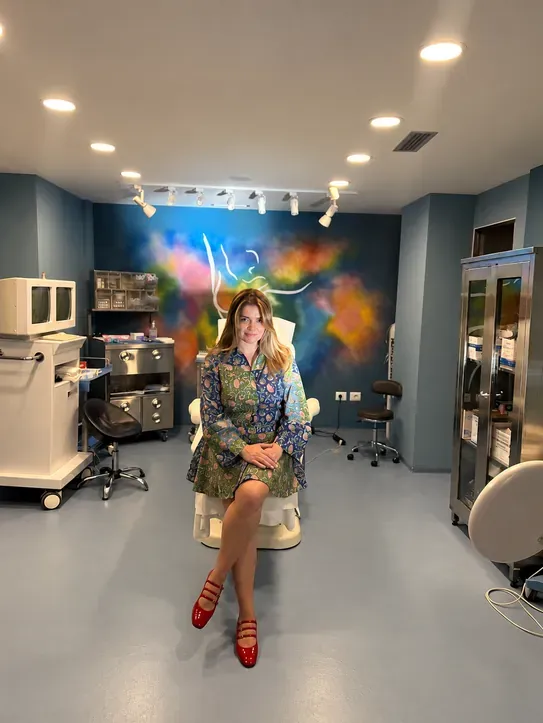
FIRST CONSULTATION
Is Facial Thread Lift right for you? Let’s talk it through together.
A first consultation is not a treatment appointment. Your concern is assessed and the options and their limits are discussed; deciding not to go ahead is also a decision.